





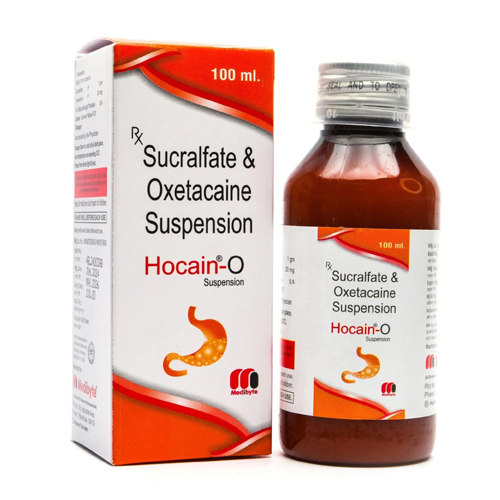

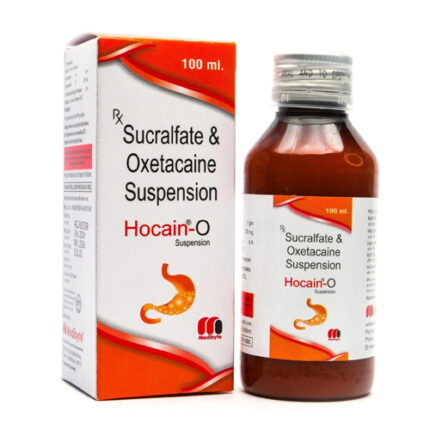
Sucralfate & Oxetacaine Suspension 100 ml
GI Protectant + Pain Relief for Feline Ulcers, Gastritis & Acid Reflux
Sucralfate & Oxetacaine Suspension is a veterinarian-prescribed oral medication used to protect the gastrointestinal lining and relieve pain in cats with gastric ulcers, esophagitis, gastritis, and acid reflux. It combines a mucosal protective agent (Sucralfate) with a local anesthetic (Oxetacaine) to support healing while reducing discomfort.
For veterinary use only.
What Is Sucralfate & Oxetacaine Suspension?
This dual-action oral suspension contains:
Sucralfate
A mucosal protectant that:
- Binds to ulcerated or inflamed GI tissue
- Forms a protective barrier over damaged areas
- Shields tissue from acid, bile, and enzymes
- Supports natural healing
Sucralfate has minimal systemic absorption.
Oxetacaine (Oxethazaine)
A local anesthetic that:
- Provides rapid topical pain relief
- Reduces burning and irritation
- Acts directly on gastric and esophageal lining
- Has minimal systemic absorption
Together, they address both tissue protection and symptom control.
When Is It Prescribed?
Veterinarians commonly use this suspension for:
Gastric Ulcers Often caused by NSAIDs, stress, systemic illness, or chronic disease.
Esophagitis Inflammation due to reflux or repeated vomiting.
Gastritis Stomach lining inflammation from infection, diet changes, or irritation.
Acid Reflux (GERD)
Medication-Induced GI Injury Including steroid or NSAID-related irritation.
CKD-Associated Gastric Irritation Supportive therapy for uremic gastritis.
Pancreatitis Support It does not treat the underlying disease but protects and soothes damaged mucosa.
Signs Your Cat May Need GI Protection
- Frequent vomiting
- Vomiting bile
- Loss of appetite
- Drooling or lip licking
- Pain after eating
- Regurgitation
- Black stool (possible ulcer)
Veterinary diagnosis is required before treatment.
Recommended Dosage (General Veterinary Guidelines)
Typical dose range:
0.5 – 1 ml per kg body weight
2–3 times daily
Example Dosing Guide
| Cat Weight | Low Dose (0.5 ml/kg) | High Dose (1 ml/kg) | Frequency |
| 2 kg | 1 ml | 2 ml | 2–3 times daily |
| 3 kg | 1.5 ml | 3 ml | 2–3 times daily |
| 4 kg | 2 ml | 4 ml | 2–3 times daily |
| 5 kg | 2.5 ml | 5 ml | 2–3 times daily |
| 6+ kg | 3 ml | 6 ml max | 2–3 times daily |
Always follow your veterinarian’s prescribed dosing schedule.
How to Administer
- Shake bottle well before use
- Measure accurately with oral syringe
- Give 30 minutes before meals
- Allow 1–2 hours gap from other oral medications
- Administer directly into the mouth
Empty stomach administration improves mucosal binding.
Treatment Duration
- Acute gastritis: 5–10 days
- Ulcers: 2–4 weeks
- Chronic conditions: As directed by veterinarian
Follow-up monitoring is recommended.
Key Benefits
- Forms protective barrier over ulcers
- Provides rapid topical pain relief
- Minimal systemic absorption
- Suitable for acute and chronic GI conditions
- Compatible with antiemetics and PPIs (with timing adjustment)
- Generally well tolerated
Safety Profile
Sucralfate and Oxetacaine are generally well tolerated in cats.
Use With Caution In:
- Chronic constipation
- Suspected intestinal obstruction
- Advanced kidney disease (due to aluminum component in sucralfate)
- Pregnant or lactating cats
Veterinary supervision is required.
Possible Side Effects
Most are mild and uncommon:
- Constipation (most common)
- Mild nausea
- Temporary drooling
- Reduced appetite (rare)
Contact your veterinarian if vomiting persists or constipation becomes severe.
Drug Interaction Advisory
Sucralfate may interfere with absorption of:
- Antibiotics
- Thyroid medications
- PPIs
- Antacids
Maintain at least 1–2 hour gap between medications.
Product Details
| Attribute | Information |
| Product Name | Sucralfate & Oxetacaine Suspension |
| Volume | 100 ml |
| Form | Oral Suspension |
| Category | Digestive Care |
| Species | Cat |
| Prescription | Required |
FAQ
What is Sucralfate & Oxetacaine used for in cats?
It protects ulcerated GI tissue and provides local pain relief in ulcers, gastritis, and reflux.
Does it reduce stomach acid?
No. It protects and coats damaged tissue but does not suppress acid production.
Can it be used with Pantoprazole?
Yes, but dosing must be separated by at least 1–2 hours.
How quickly does Oxetacaine relieve pain?
Pain relief typically begins shortly after administration.


Charlie Moore –
A clean and useful listing for Sucralfate Oxetacaine Suspension 100 ML. I appreciated the clear product name, size details, and simple buying process on the website.
Archie Wood –
The Sucralfate Oxetacaine Suspension 100 ML page was easy to navigate and the information felt organized. A good experience for pet product shopping online.
Archie Wood –
The website made it simple to find and order Sucralfate Oxetacaine Suspension 100 ML. The product page was clean, direct, and easy to use.