





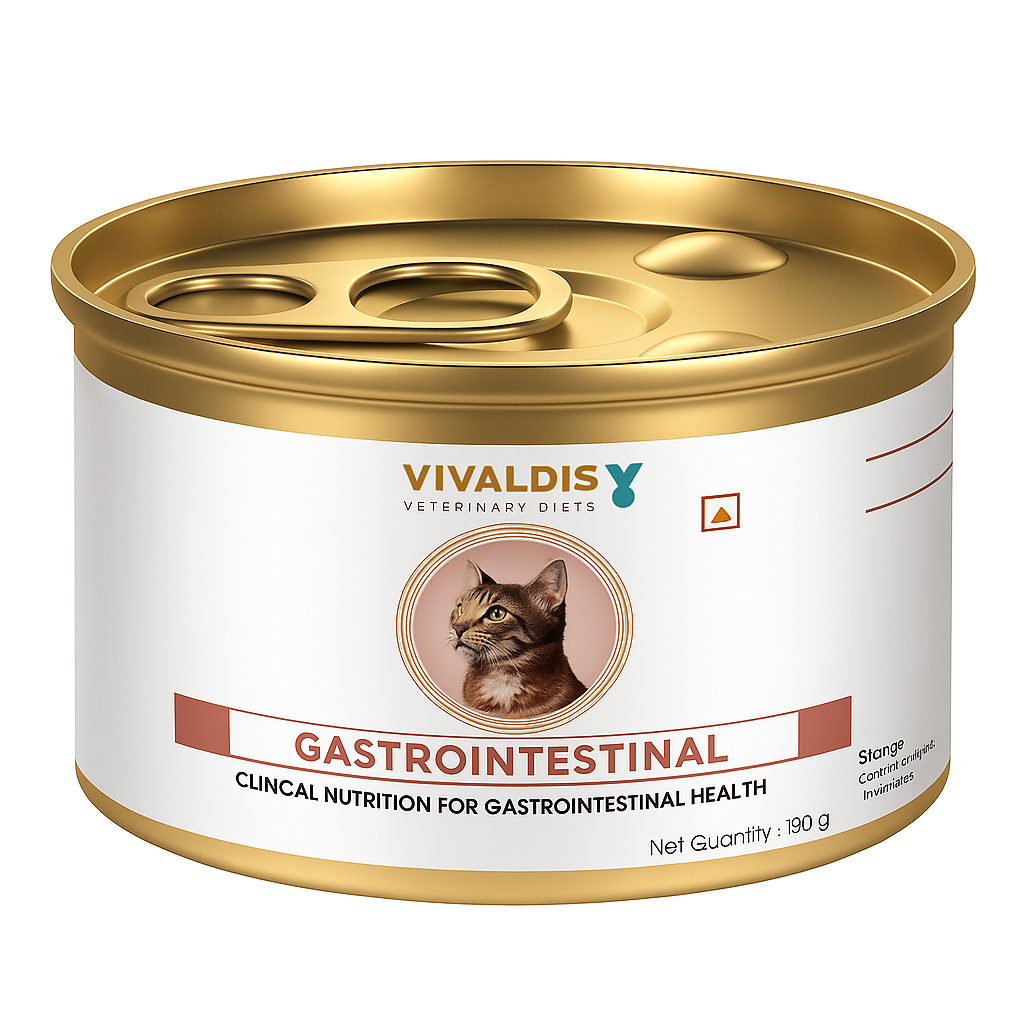


Gastrointestinal Wet Food for Cats 190g
Digestive disturbances can significantly impact a cat’s hydration, nutrient absorption, and immune function. Gastrointestinal Wet Food 190g is formulated to:
- Reduce digestive workload
- Improve stool consistency
- Restore hydration
- Support gut microbiome balance
- Promote recovery after illness or surgery
Its soft texture and high moisture content make it suitable for cats with reduced appetite or sensitive stomachs.
Key Features
- Highly digestible protein sources
- Moderate to low fat content (suitable for pancreatitis management)
- Added prebiotics (FOS/MOS)
- Balanced electrolytes
- Omega-3 & Omega-6 fatty acids
- Antioxidant-enriched formula
- 75–80% moisture for hydration support
Indications for Use
This therapeutic diet may be recommended for:
- Acute or chronic diarrhea
- Vomiting or regurgitation
- Inflammatory Bowel Disease (IBD)
- Pancreatitis
- Exocrine Pancreatic Insufficiency (EPI)
- Food sensitivities or intolerances
- Post-surgical gastrointestinal recovery
- Post-antibiotic digestive imbalance
- Malabsorption or maldigestion syndromes
Veterinary supervision is recommended before initiating any therapeutic diet.
Nutritional Profile (Approximate per 100g)
| Nutrient | Amount |
| Crude Protein | 8.5% |
| Crude Fat | 5.0% |
| Crude Fiber | 1.0% |
| Moisture | 80.0% |
| Ash | 2.0% |
| Energy | ~90–100 kcal |
Feeding Guidelines
Daily feeding amounts vary depending on weight, clinical condition, and activity level.
| Cat Weight | Daily Amount (grams) | Approx. Cans per Day |
| 2 – 2.5 kg | 110 – 130 g | 0.6 – 0.7 can |
| 3 – 4 kg | 150 – 200 g | 0.8 – 1.0 can |
| 5 – 5.5 kg | 220 – 250 g | 1.2 – 1.3 cans |
| 6 – 6.5 kg | 260 – 290 g | 1.4 – 1.5 cans |
| 7 – 8 kg | 300 – 330 g | 1.6 – 1.8 cans |
Feeding Instructions
- Divide daily ration into 2–3 small meals
- Transition gradually over 5–7 days
- Serve at room temperature
- Always provide fresh water
- Refrigerate opened tins and use within 48 hours
Duration of Use
| Condition | Recommended Duration |
| Acute diarrhea | 5–7 days |
| Post-surgical recovery | 7–14 days |
| Post-antibiotic recovery | 7–10 days |
| Chronic IBD or pancreatitis | Long-term under vet guidance |
Benefits of Gastrointestinal Wet Food
- Improves stool quality
- Reduces vomiting episodes
- Supports gut microbiota balance
- Enhances nutrient absorption
- Helps maintain healthy body weight
- Encourages appetite during illness
- Clinically supported formulation
Safety & Precautions
Use Under Veterinary Supervision If:
- Your cat has chronic kidney disease
- Your cat has diabetes
- Your cat is pregnant or nursing
- Persistent symptoms continue beyond 3–5 days
Not Intended For:
- Healthy cats without GI disorders
- Long-term feeding without veterinary approval
Possible Mild Side Effects:
- Temporary soft stool during transition
- Mild bloating
- Rare food refusal
Discontinue use and consult your veterinarian if severe vomiting, lethargy, or allergic signs develop.
Frequently Asked Questions
Can this be fed long-term?
Yes, in chronic GI conditions under veterinary supervision.
Is it safe for kittens?
Only if prescribed by a veterinarian.
How fast will improvement occur?
Many cats show improved stool quality within 3–5 days.
Can it be mixed with regular food?
Only under veterinary guidance, as mixing may reduce therapeutic effectiveness.



Oliver Green –
A clean and useful listing for Gastrointestinal Wet Food for Cat 190g. I appreciated the clear product name, size details, and simple buying process on the website.
Lauren Reed –
The Gastrointestinal Wet Food for Cat 190g listing was clear and easy to understand. I liked that the product details were simple to check before placing the order.
Jessica Miller –
The Gastrointestinal Wet Food for Cat 190g listing was clear and easy to understand. I liked that the product details were simple to check before placing the order.