





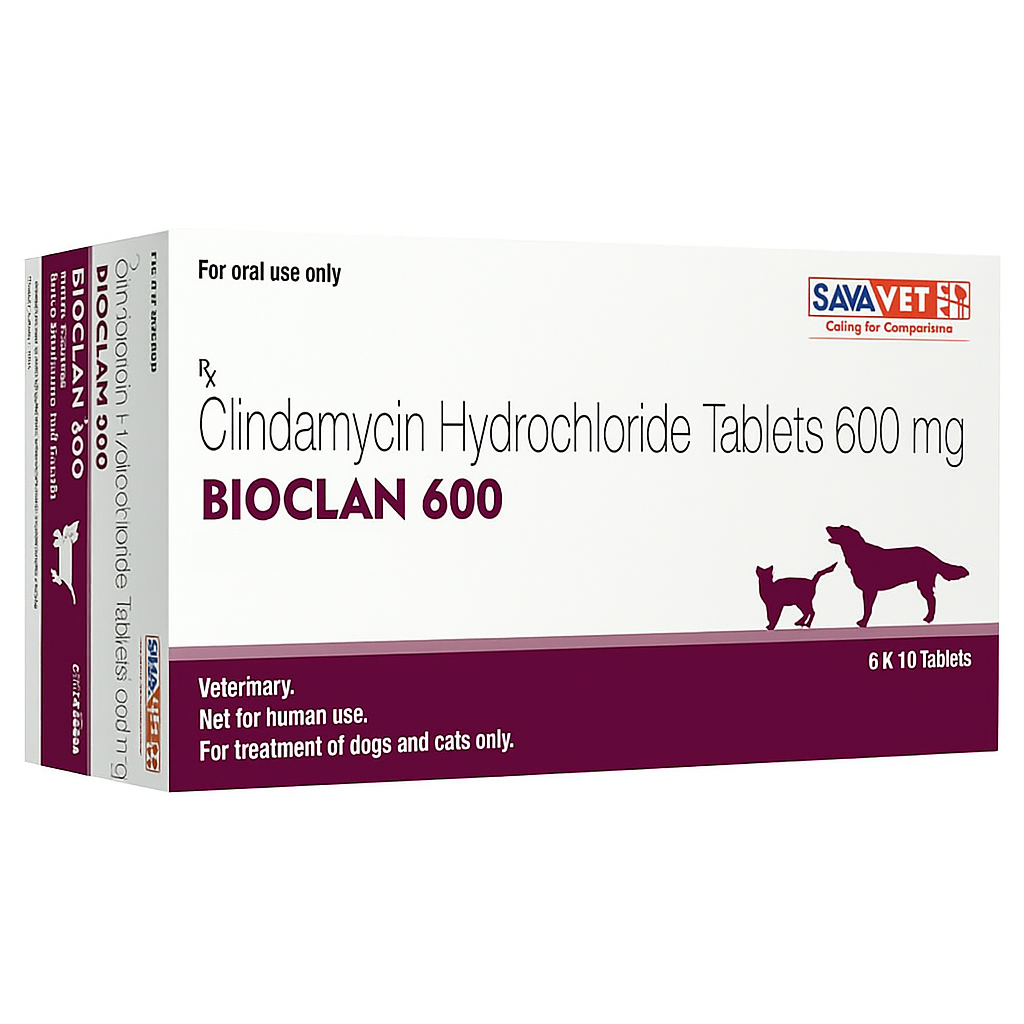
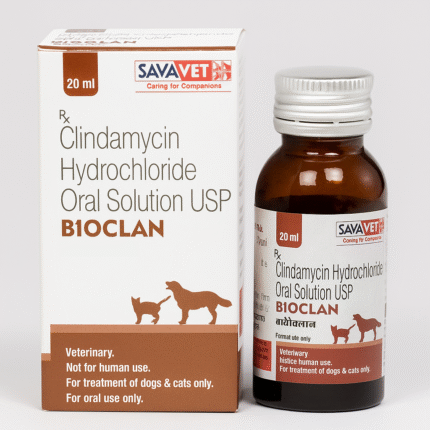
Clindamycin Hydrochloride Tablet for Cat
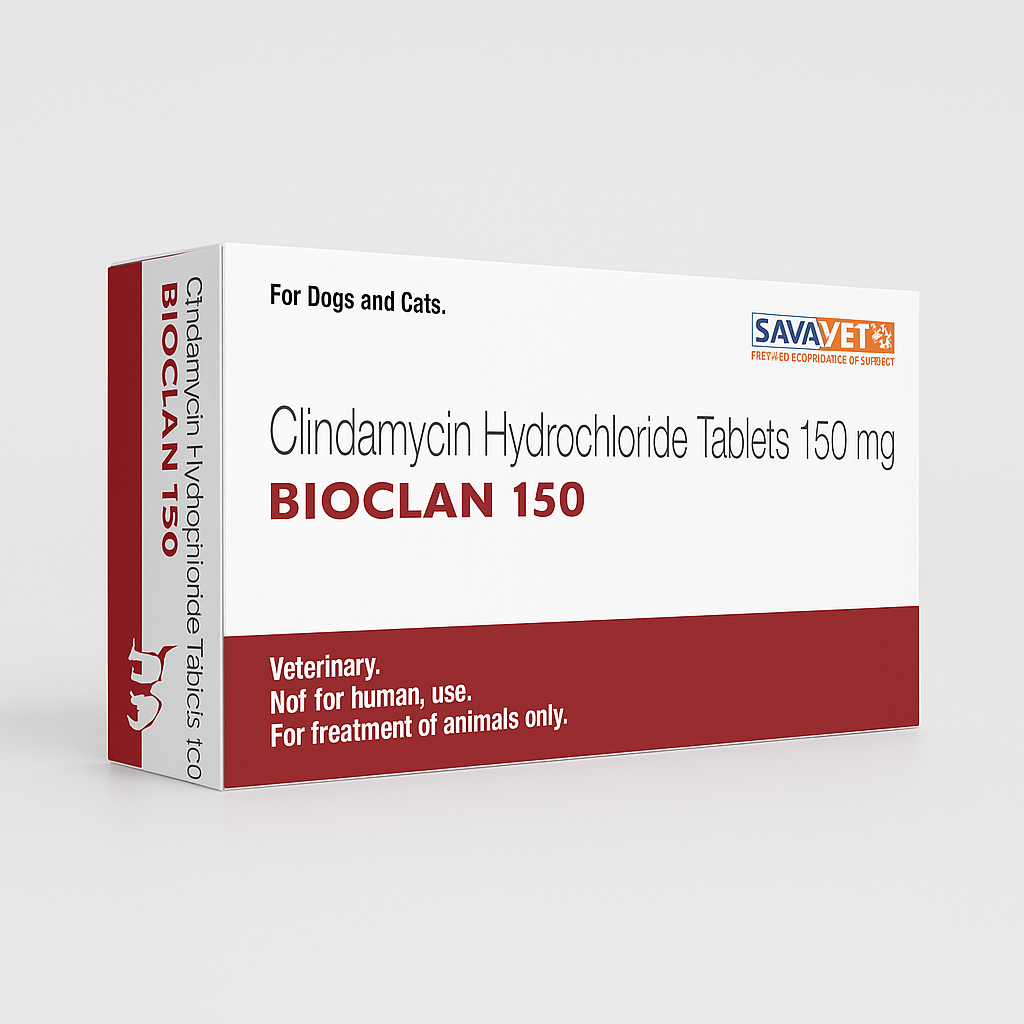
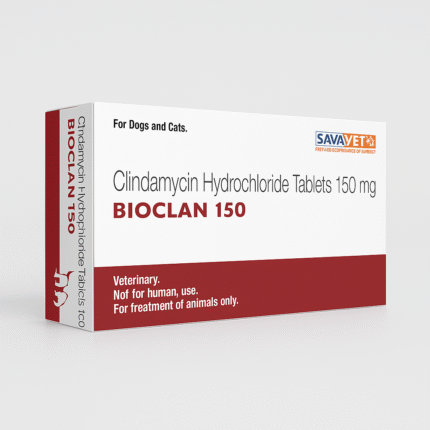
Clindamycin Hydrochloride Tablets (150 mg strength) are prescribed in cats to treat infections caused by susceptible anaerobic bacteria and certain Gram-positive organisms. It is commonly used for dental infections, abscesses, skin and soft tissue infections, bone infections (osteomyelitis), and selected respiratory infections. Clindamycin works by inhibiting bacterial protein synthesis, helping stop the spread of infection so the cat’s immune system can eliminate the pathogens effectively.
Key Benefits
- Effective against anaerobic bacteria
- Strong tissue and bone penetration
- Commonly used for dental and abscess infections
- Useful in deep soft tissue infections
- Administered orally for convenient dosing
- Often shows clinical improvement within 3–5 days
How Clindamycin Works
Clindamycin binds to the 50S subunit of bacterial ribosomes, inhibiting protein synthesis. Without essential proteins, bacteria cannot grow or reproduce, leading to infection control and resolution. It is particularly effective in low-oxygen environments (such as abscesses and oral infections) where anaerobic bacteria thrive.
Indications in Cats
Veterinarians may prescribe Clindamycin for:
Dental Infections
- Periodontitis
- Gingivitis
- Dental abscesses
- Oral bacterial infections
Skin & Soft Tissue Infections
- Pyoderma
- Bite wound abscesses
- Wound infections
Bone & Joint Infections
- Osteomyelitis
- Septic arthritis
Respiratory Infections
- Sinusitis
- Pneumonia caused by susceptible bacteria
Toxoplasmosis
Clindamycin is also commonly used in managing Toxoplasma gondii infections in cats.
Strength Available
- 150 mg tablet
- Pack size: 10 tablets
Tablet splitting may be required based on weight and veterinary dosing instructions.
Dosage & Administration
⚠ Always follow your veterinarian’s prescription.
General Dosing Guideline (Typical Range: 5–10 mg/kg every 12 hours)
| Cat Weight | Approximate Dose | Tablet Fraction (150 mg) | Frequency | Duration |
| Up to 2.3 kg | ~25 mg | ¼ tablet | Every 12 hrs | 7–10 days |
| 2.3–4.5 kg | ~50 mg | ½ tablet | Every 12 hrs | 7–10 days |
| 4.5–6.8 kg | ~75 mg | ¾ tablet | Every 12 hrs | 7–14 days |
| 6.8–9.1 kg | ~100 mg | 1 tablet (as directed) | Every 12 hrs | As prescribed |
Administration Tips
- Give with food to reduce stomach upset
- Ensure tablet is fully swallowed (follow with water if possible)
- Do not crush unless approved by veterinarian
- Complete the full prescribed course
Safety & Precautions
Do Not Use In:
- Cats with known hypersensitivity to clindamycin or lincomycin
- Without veterinary prescription
Use With Caution In:
- Cats with liver disease
- Cats with kidney impairment
- Cats with history of gastrointestinal disorders
Possible Side Effects:
- Vomiting
- Diarrhea
- Loss of appetite
- Mild lethargy
Serious Reactions (Seek Veterinary Care Immediately):
- Severe diarrhea (especially with blood)
- Persistent vomiting
- Difficulty swallowing
- Jaundice (yellowing of gums/eyes)
- Allergic swelling or breathing difficulty
FAQs
How quickly does it work?
Improvement is often seen within 3–5 days, but the full course must be completed.
Can it treat viral infections?
No. It is effective only against susceptible bacterial and certain protozoal infections.
Is it safe for long-term use?
Long-term use may require veterinary monitoring, especially for liver function.
What if my cat misses a dose?
Give as soon as remembered unless close to the next scheduled dose. Do not double dose.



James Wilson –
I found the Clindamycin Hydrochloride Tablet for Cat page helpful while comparing options for my pet. The ordering process was straightforward and the details were easy to follow.
Lauren Reed –
The product information for Clindamycin Hydrochloride Tablet for Cat was presented neatly. It helped me review the basics before buying, and the checkout experience was smooth.
Lauren Reed –
The product information for Clindamycin Hydrochloride Tablet for Cat was presented neatly. It helped me review the basics before buying, and the checkout experience was smooth.
Chloe Henderson –
The product information for Clindamycin Hydrochloride Tablet was presented neatly. It helped me review the basics before buying, and the checkout experience was smooth.
Rachel Cooper –
Ordering Clindamycin Hydrochloride Tablet was simple. The page gave enough information to review the item properly before confirming the purchase.
Ava Richardson –
Ordering Clindamycin Hydrochloride Tablet was simple. The page gave enough information to review the item properly before confirming the purchase.