





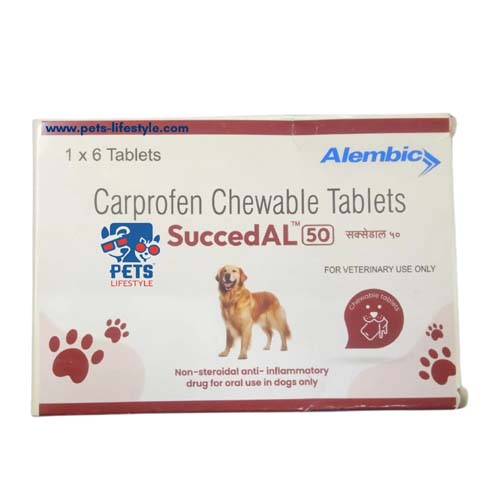
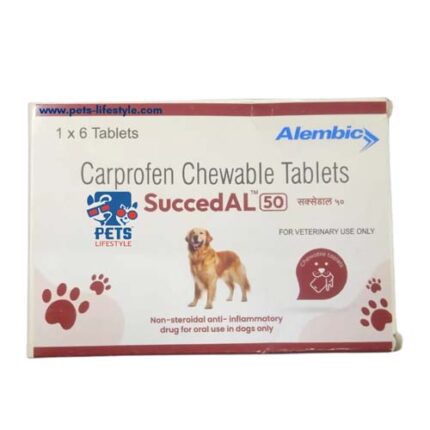
Carprofen Chewable Tablets 50 mg for Cat
Carprofen Chewable Tablets 50 mg contain carprofen, a non-steroidal anti-inflammatory drug (NSAID) used to reduce pain, inflammation, and swelling in veterinary patients. In cats, NSAID therapy must be used with extreme caution due to their unique liver metabolism and increased sensitivity to this drug class. Carprofen may be prescribed for short-term management of:
- Post-operative pain
- Acute musculoskeletal injury
- Inflammatory conditions
- Select cases of osteoarthritis (with monitoring)
This medication is not a joint supplement. It is a prescription-strength anti-inflammatory drug that should only be given under direct veterinary guidance.
How Carprofen Works
Carprofen reduces inflammation and pain by inhibiting cyclooxygenase (COX) enzymes involved in prostaglandin production.
Prostaglandins are responsible for:
- Pain signaling
- Swelling
- Fever
- Inflammatory response
By reducing prostaglandin synthesis, carprofen:
- Decreases inflammation
- Relieves discomfort
- Improves short-term mobility
While carprofen has some COX-2 selectivity, cats remain more sensitive to NSAID-related adverse effects compared to dogs.
Indications for Use in Cats
Carprofen 50 mg may be prescribed for:
Post-Surgical Pain
- Soft tissue procedures
- Orthopedic surgery
- Dental procedures (short-term use)
Acute Musculoskeletal Injury
- Sprains
- Strains
- Soft tissue trauma
Inflammatory Joint Conditions
- Select osteoarthritis cases
- Short-term flare-ups
⚠ Long-term NSAID therapy in cats requires strict monitoring and is not routine unless specifically recommended by a veterinarian.
Dosage & Administration
Important: The 50 mg strength is typically higher than what many cats require. Tablets are often split according to body weight and veterinary instruction.
⚠ Veterinary Prescription Required
Do not self-dose based on canine guidelines.
General Dosing Principles (Veterinary Directed)
| Cat Weight | Typical Dose | Frequency | Notes |
| Small cats | Fraction of tablet | As prescribed | Tablet splitting required |
| Medium cats | Adjusted dose | Once daily | Short duration preferred |
| Large cats | As prescribed | Once daily | Monitor closely |
Because 50 mg is a higher-strength tablet, accurate splitting with a pill cutter is essential.
Administration Guidelines
- Give with food to reduce stomach irritation
- Ensure constant access to fresh water
- Do not exceed prescribed dose
- Do not combine with other NSAIDs or steroids
Safety Profile & Monitoring
Carprofen is generally safe when:
- Properly dosed
- Used short-term
- Monitored with bloodwork
However, NSAIDs can cause serious adverse effects in cats if misused.
Common Side Effects
- Vomiting
- Diarrhea
- Decreased appetite
- Mild lethargy
Serious Adverse Effects (Seek Immediate Vet Care)
- Black or tarry stools
- Vomiting blood
- Increased thirst or urination
- Yellowing of gums or eyes (jaundice)
- Collapse
- Behavioral changes
Contraindications
Do NOT use in cats with:
- Kidney disease
- Liver disease
- Gastrointestinal ulcers
- Dehydration
- Concurrent steroid therapy
- Other NSAID treatment
Not recommended in:
- Pregnant or nursing queens
- Very young kittens
- Severely debilitated cats
Drug Interactions
Use caution if your cat is taking:
- ACE inhibitors
- Diuretics
- Corticosteroids
- Other NSAIDs
- Nephrotoxic medications
Your veterinarian may recommend baseline and follow-up blood testing.
Frequently Asked Questions
Is 50 mg safe for cats?
Yes — but usually only in divided doses and under veterinary supervision. Many cats require only a fraction of this tablet.
Can I give this long-term for arthritis?
Long-term NSAID therapy in cats requires careful bloodwork monitoring and veterinary oversight.
Can I combine this with meloxicam?
No. Never combine NSAIDs unless specifically instructed by your veterinarian.
Is this a joint supplement like glucosamine?
No. Carprofen is a pharmaceutical anti-inflammatory drug, not a nutraceutical.


Lauren Reed –
Ordering Carprofen Chewable Tablets 50 MG for Cat was simple. The page gave enough information to review the item properly before confirming the purchase.
William Wright –
A clean and useful listing for Carprofen Chewable Tablets 50 MG for Cat. I appreciated the clear product name, size details, and simple buying process on the website.
Jacob Ward –
I found the Carprofen Chewable Tablets 50 MG for Cat page helpful while comparing options for my pet. The ordering process was straightforward and the details were easy to follow.
Archie Wood –
The Carprofen Chewable Tablets 50 MG page was easy to navigate and the information felt organized. A good experience for pet product shopping online.