





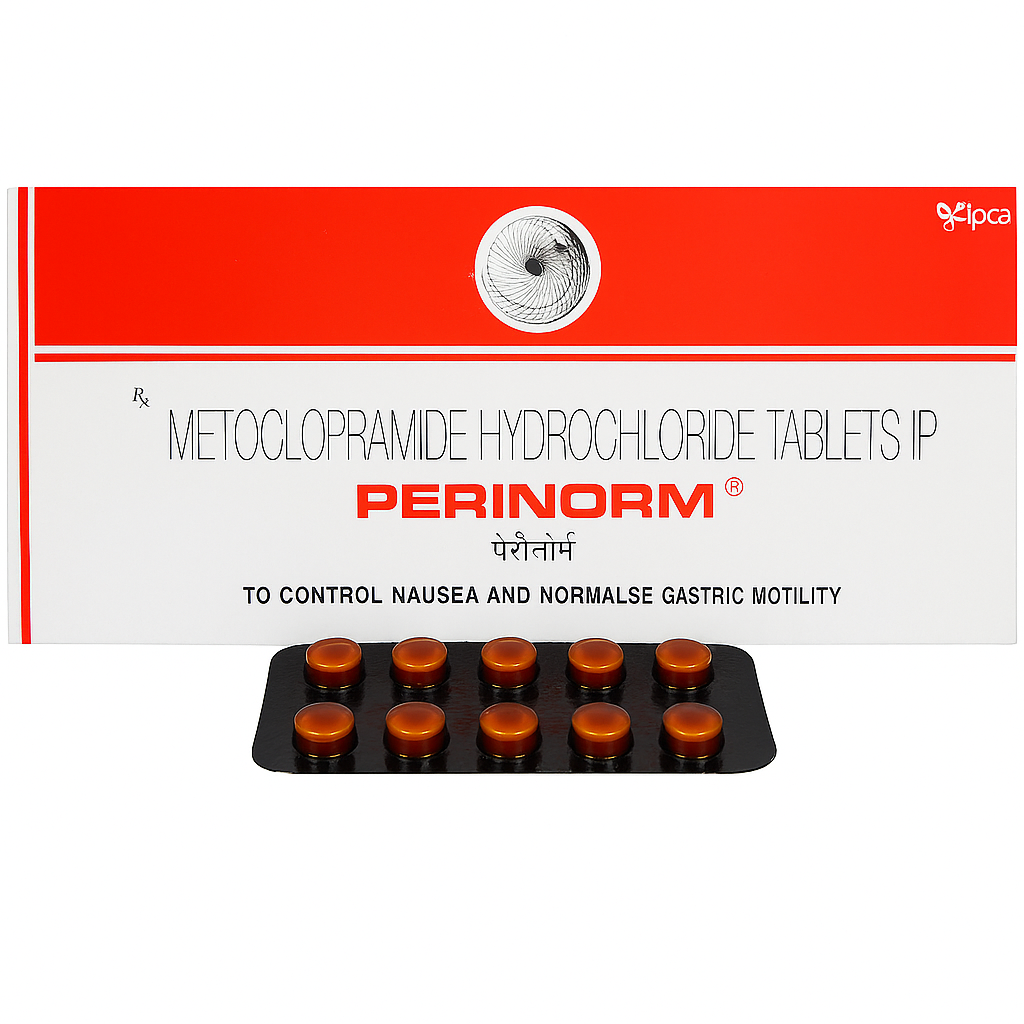
Metoclopramide Hydrochloride Tablets for Cat
Veterinary Antiemetic & Gastric Motility Support
Metoclopramide Hydrochloride Tablets are prescription oral tablets used in cats to control nausea, reduce vomiting, and improve delayed stomach emptying. This medication works by suppressing the vomiting reflex and enhancing gastrointestinal movement. It is commonly prescribed for acute digestive upset and specific motility disorders.
⚠️ Veterinary prescription required.
What This Medication Is Used For
Your veterinarian may prescribe Metoclopramide for:
- Acute or chronic vomiting
- Nausea
- Delayed gastric emptying (gastroparesis)
- Acid reflux
- Gastritis
- Post-operative nausea
- Chemotherapy-related nausea
- Mild gastrointestinal stasis
It does not cure the underlying cause of vomiting. Proper diagnosis is required before treatment.
How Metoclopramide Works
Metoclopramide has dual action:
1. Central Antiemetic Action
- Blocks dopamine receptors in the brain
- Reduces the vomiting reflex
- Helps control nausea
2. Prokinetic (Motility) Action
- Strengthens lower esophageal sphincter tone
- Promotes gastric contractions
- Speeds stomach emptying
- Improves intestinal movement
This combined action helps relieve nausea while restoring normal digestive flow.
Key Clinical Benefits
- Helps reduce vomiting frequency
- Supports appetite recovery
- Improves gastric emptying
- Reduces reflux risk
- Acts within 30–60 minutes (oral dosing)
When used as directed, it is generally well tolerated in cats.
Recommended Dosage (Veterinary Guidance Required)
Standard feline oral dosing:
0.2–0.5 mg per kg body weight every 8 hours
Weight-Based Reference Guide
| Cat Weight | Dose Range | Approximate Tablet Portion |
| 3 kg | 0.6–1.5 mg | ~1/8–1/6 tablet |
| 4 kg | 0.8–2.0 mg | ~1/6–1/5 tablet |
| 5 kg | 1.0–2.5 mg | ~1/4 tablet |
| 6+ kg | 1.2–3.0 mg | ~1/4–1/3 tablet |
⚠️ Tablets often require precise splitting or compounding for accurate feline dosing.
Duration of Treatment
- Acute cases: Typically 3–5 days
- Extended use: Only under veterinary monitoring
Do not extend use without professional supervision.
How to Administer
- May be given with or without food
- Give every 8 hours unless otherwise directed
- If vomiting occurs within 30 minutes, consult your vet before repeating dose
- Compounded liquid may be preferred for small cats
Consistency improves effectiveness.
Possible Side Effects
Most cats tolerate Metoclopramide well. Potential side effects may include:
- Mild drowsiness
- Restlessness
- Hyperactivity
- Soft stools
- Rare tremors
- Very rare seizures
If unusual neurologic signs appear, discontinue and contact your veterinarian immediately.
Do NOT Use If Your Cat Has:
- Gastrointestinal obstruction
- GI perforation
- GI bleeding
- Seizure disorders
- Known hypersensitivity to Metoclopramide
- Pheochromocytoma
Use cautiously in cats with kidney or liver disease.
Drug Interactions
Use caution if your cat is receiving:
- Phenothiazines (e.g., acepromazine)
- Opioids
- CNS depressants
- Anticholinergics
- MAO inhibitors
Always inform your veterinarian of all medications your cat is taking.
When to Contact Your Veterinarian
Seek veterinary care if you notice:
- Persistent vomiting
- Tremors or seizures
- Severe behavioral changes
- Facial swelling
- Difficulty breathing
Product Information
| Attribute | Details |
| Product Name | Metoclopramide Hydrochloride Tablet for Cat |
| Pack Size | 20 Tablets |
| Category | Digestive Care |
| Form | Oral Tablet |
| Use | Prescription Antiemetic & Prokinetic |
| Species | Cat |



Rachel Cooper –
I liked how clearly Metoclopramide Hydrochloride Tablet for Cat was listed. The page made it easier to check the item details and complete the order without confusion.
Jack Thompson –
A clean and useful listing for Metoclopramide Hydrochloride Tablet for Cat. I appreciated the clear product name, size details, and simple buying process on the website.
Amanda Lewis –
I liked how clearly Metoclopramide Hydrochloride Tablet for Cat was listed. The page made it easier to check the item details and complete the order without confusion.