





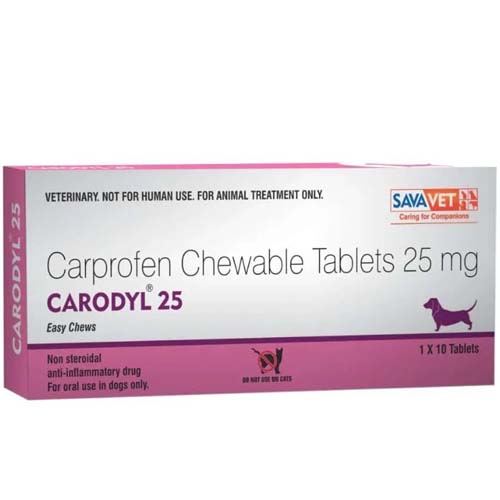

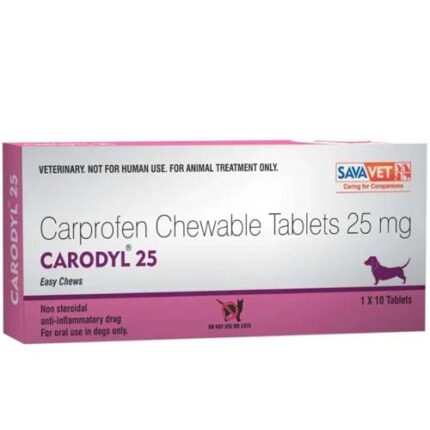
Carprofen Chewable Tablets 25 mg for cat
Carprofen Chewable Tablets 25 mg contain carprofen, a non-steroidal anti-inflammatory drug (NSAID) used in veterinary medicine to manage pain, inflammation, and stiffness. In feline patients, NSAIDs must be used with extreme caution and only under direct veterinary guidance due to cats’ unique drug metabolism. Carprofen may be prescribed in select cases for short-term pain control, including post-operative pain or inflammatory musculoskeletal conditions. It is not a joint supplement and should only be administered exactly as directed by a licensed veterinarian.
Key Benefits
- Provides anti-inflammatory action
- Helps relieve acute pain
- Reduces swelling in soft tissue injuries
- May improve short-term mobility in painful conditions
- Used in post-surgical pain management under supervision
- Convenient chewable tablet form
How It Works
Carprofen belongs to the NSAID class of medications. It works by inhibiting cyclooxygenase (COX) enzymes involved in prostaglandin production. Prostaglandins are chemicals responsible for pain, inflammation, and swelling.
By reducing prostaglandin synthesis, carprofen:
- Decreases inflammation
- Relieves pain
- Improves comfort and mobility
Because cats are more sensitive to NSAIDs than dogs, dosing must be precise and monitored carefully.
Indications – When Is Carprofen Used in Cats?
Carprofen may be prescribed for:
- Post-operative pain management
- Acute musculoskeletal injury
- Soft tissue inflammation
- Short-term orthopedic discomfort
It is not typically recommended for long-term use in cats unless specifically advised and closely monitored by a veterinarian.
Active Ingredient Overview
| Ingredient | Function |
| Carprofen 25 mg | NSAID that reduces inflammation and relieves pain |
This is a prescription-strength anti-inflammatory medication, not a nutraceutical joint supplement.
Dosage & Administration
Important: Dosage must be determined by a veterinarian.
General Feline NSAID Principles
- Cats require significantly lower doses than dogs
- Use the lowest effective dose
- Short-term use is preferred
- Never combine with other NSAIDs unless instructed
Typical Veterinary Guidance (Example Only)
| Condition | Dose | Frequency | Duration |
| Post-surgical pain | As prescribed | Once daily or as directed | Short-term (often 1–3 days) |
Do not extrapolate canine dosing for cats.
Administration Guidelines
- Give with food to reduce gastrointestinal irritation
- Ensure fresh water is always available
- Do not crush unless advised by your vet
- Never exceed prescribed dose
Safety Information
High-Risk Medication in Cats – Requires Monitoring
Cats are more sensitive to NSAID-related adverse effects.
Possible Side Effects
Common (though still uncommon in properly dosed cats):
- Vomiting
- Diarrhea
- Reduced appetite
Serious (seek veterinary care immediately):
- Lethargy
- Black or tarry stools
- Blood in vomit
- Increased thirst or urination
- Jaundice (yellow gums/eyes)
- Kidney or liver dysfunction
Contraindications
Do NOT use in cats with:
- Kidney disease
- Liver disease
- Dehydration
- Gastrointestinal ulcers
- Concurrent NSAID or steroid therapy
- Known hypersensitivity to NSAIDs
Monitoring Recommendations
Veterinarians may recommend:
- Baseline bloodwork before use
- Monitoring kidney and liver parameters
- Electrolyte evaluation
Never use human painkillers in cats.
FAQs
Is Carprofen safe for cats?
It can be used in select cases under strict veterinary supervision. Cats metabolize NSAIDs differently, so dosing must be precise.
Can this be used long-term?
Long-term NSAID therapy in cats requires careful monitoring and is generally avoided unless specifically prescribed.
Can I combine it with another pain medication?
Never combine NSAIDs or steroids without veterinary approval.
What should I do if my cat vomits after dosing?
Contact your veterinarian before giving another dose.
Is this a joint supplement?
No. This is a pharmaceutical anti-inflammatory drug, not a cartilage-support supplement.



Reviews
There are no reviews yet.