





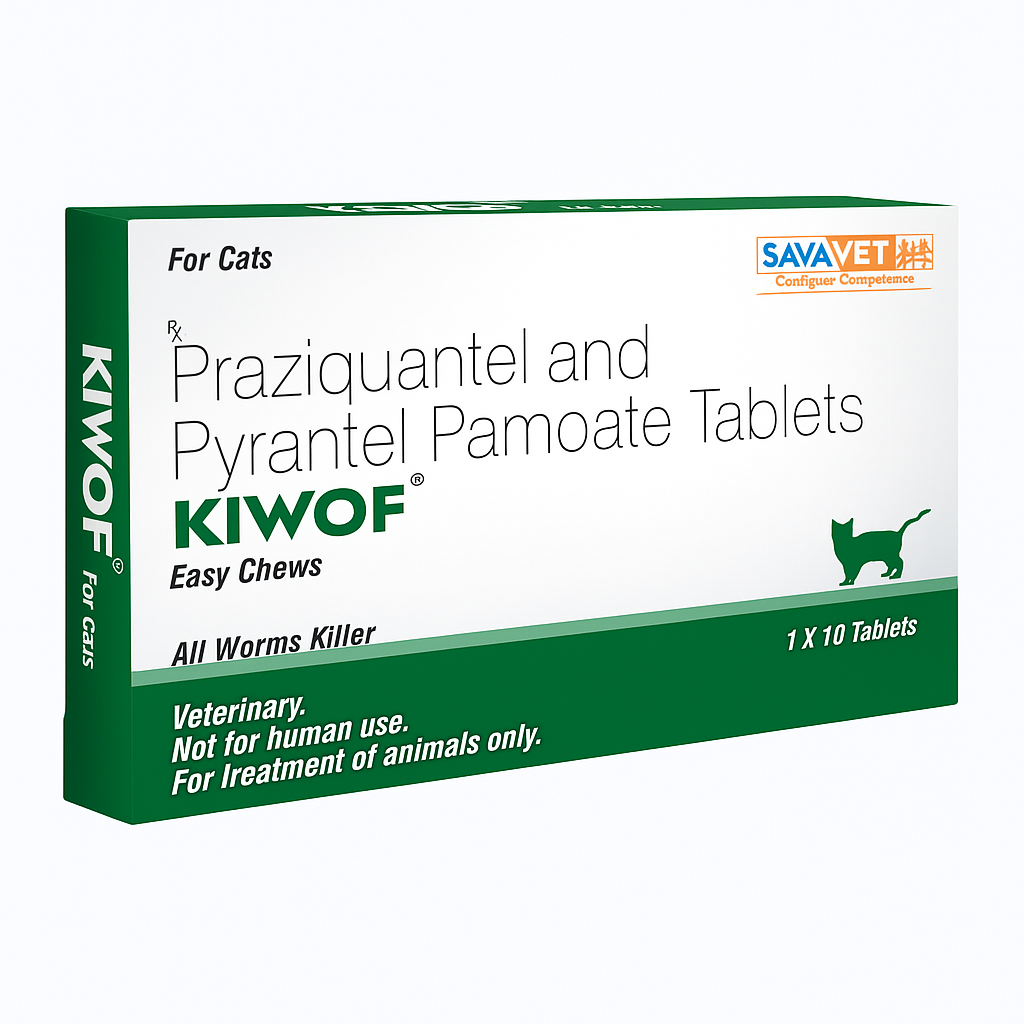
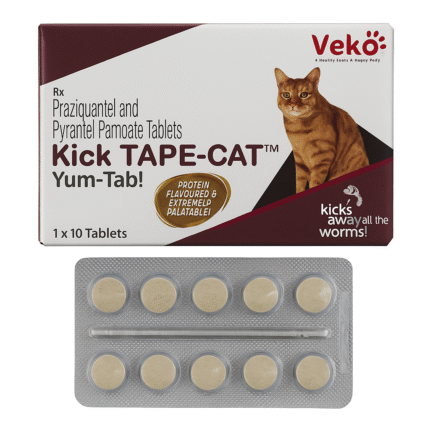
Praziquantel and Pyrantel Pamoate tablet for cat
Intestinal worms are common in cats of all lifestyles—indoor cats can pick them up from contaminated environments, while outdoor cats have higher exposure through hunting, soil contact, fleas, and other animals. A combined dewormer like Praziquantel + Pyrantel Pamoate offers wide coverage when mixed infections are suspected or confirmed.
What It Treats
This combination is commonly used for:
- Tapeworms (e.g., Dipylidium caninum, Taenia spp.) – often linked to flea ingestion
- Roundworms (e.g., Toxocara cati)
- Hookworms (e.g., Ancylostoma spp.)
Some formulations may not cover every parasite type (for example, certain “whipworm” claims are more relevant to dogs than cats). When in doubt, match treatment to a vet diagnosis or stool test.
How It Works
Praziquantel (Tapeworm specialist)
- Damages the tapeworm’s outer surface and disrupts internal balance, causing it to lose its grip on the intestinal wall and be digested/cleared.
Pyrantel Pamoate (Roundworm & hookworm specialist)
- Acts on worm neuromuscular function, causing paralysis so worms detach and pass out through the stool.
Why the combination matters: one tablet targets multiple common worm types, reducing the need for separate products.
Signs Your Cat May Need Deworming
Common signs that can be associated with intestinal worms include:
- Vomiting or diarrhea
- Weight loss or poor appetite
- Dull coat, low energy
- Pot-bellied appearance (more common in kittens)
- “Rice-like” segments near the anus or in bedding (typical tapeworm sign)
These signs can also be caused by other conditions, so veterinary guidance is important—especially if symptoms persist.
Dosage and Administration
Dose depends on your cat’s weight and the tablet strength. Follow the product label or your veterinarian’s instructions.
Example dosing pattern (weight-based)
| Cat Weight | Typical Dose Pattern* |
| Up to 2 kg | 1/2 tablet |
| 2–5 kg | 1 tablet |
| 5–10 kg | 2 tablets |
*This is a common pattern for combination tablets, but tablet strength varies by brand. Use the on-pack directions as the primary reference.
How to give it
- Direct oral: Place tablet at the back of the tongue, gently close mouth, encourage swallow.
- Hidden in food: Use a small amount of wet food or a pill pocket.
- Crushed: Only if label allows (some tablets are bitter; confirm suitability).
Repeat dosing: A second dose may be recommended in certain cases (heavy burden, reinfection risk, kitten schedules). Your vet can confirm timing.
Safety, Precautions, and Side Effects
Most cats tolerate these actives well when dosed correctly.
Possible mild side effects
- Temporary vomiting
- Soft stool/diarrhea
- Mild lethargy
Stop and contact a vet urgently if you see
- Facial swelling, hives
- Trouble breathing
- Severe vomiting/diarrhea
- Collapse, tremors, or unusual weakness
Important precautions
- Kittens: Use only when age/weight meets label guidance.
- Pregnancy/lactation: Use under veterinary advice.
- Sick cats or cats with liver/kidney issues: Vet supervision recommended.
- Tapeworm control requires flea control: Treating worms without flea prevention often leads to reinfection.
Best-Practice Deworming Plan
For strong, lasting results:
- Combine deworming with flea prevention (tapeworm cycle)
- Clean bedding, vacuum regularly if parasites are suspected
- Consider periodic stool exams for outdoor cats or multi-pet homes
- Keep deworming intervals aligned with your vet’s risk-based schedule


Reviews
There are no reviews yet.