





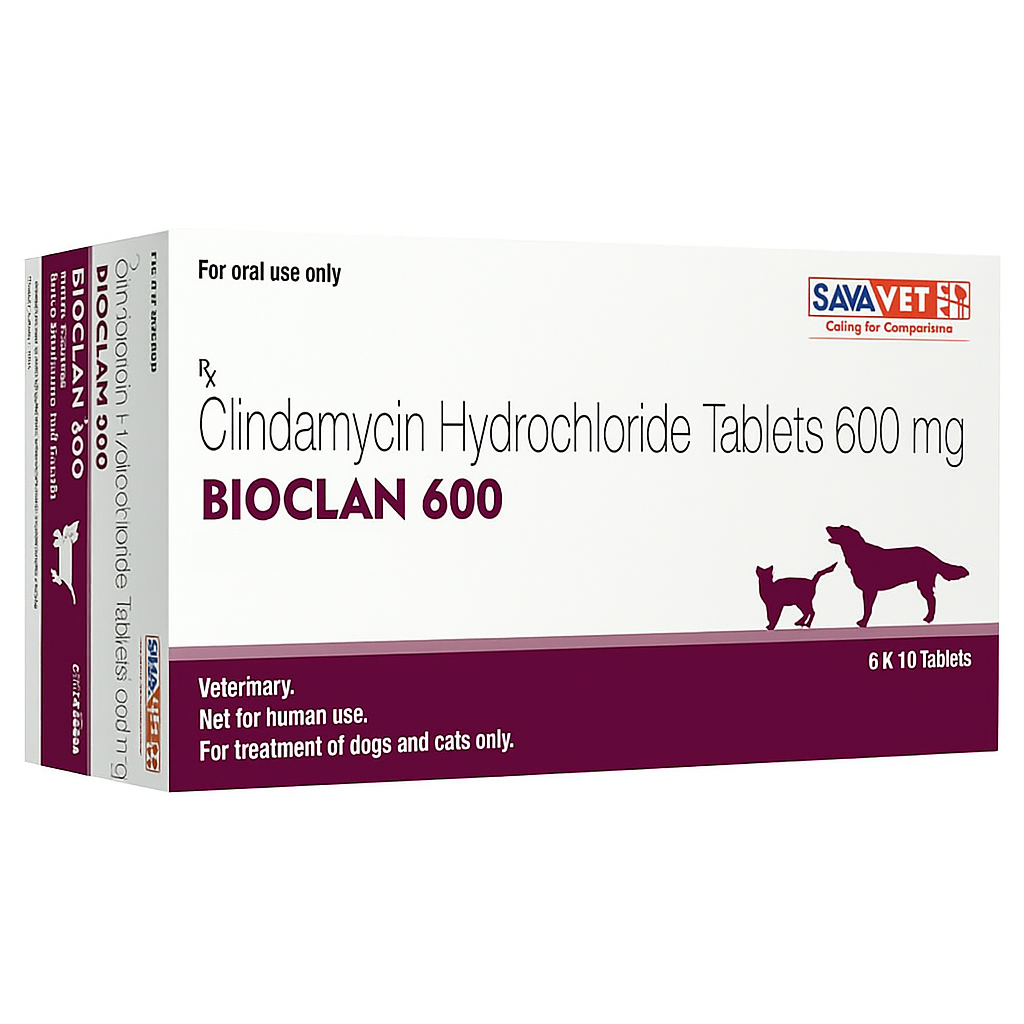
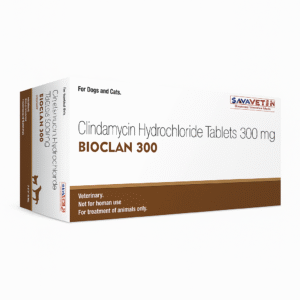
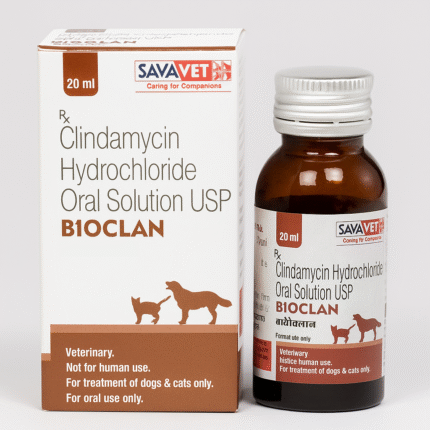
Clindamycin Hydrochloride Tablet
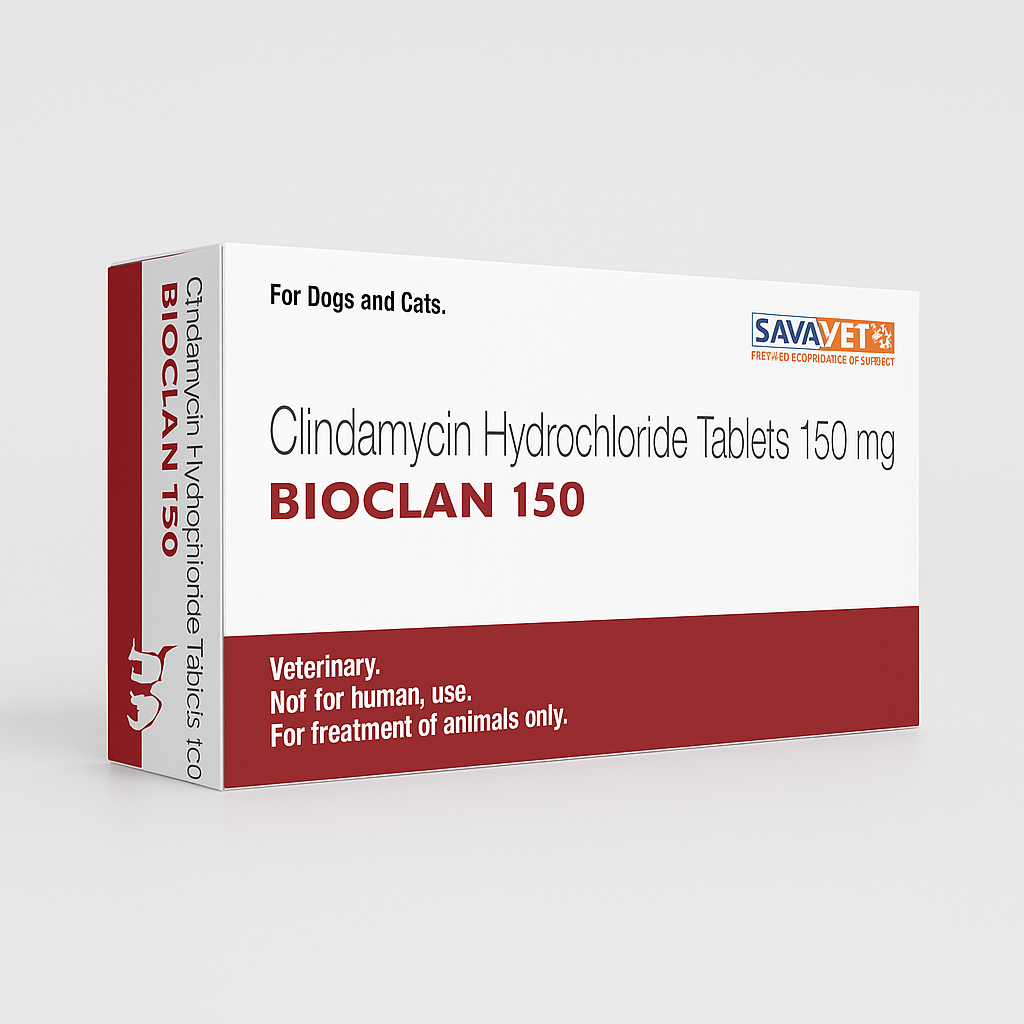
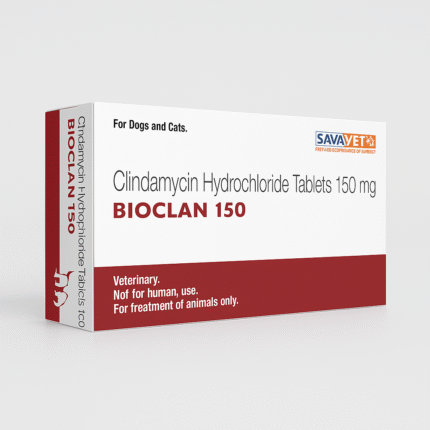
Clindamycin Hydrochloride Tablets are a targeted veterinary antibiotic commonly prescribed for oral, bone, and deep tissue infections in dogs. It is selected when infections involve anaerobic bacteria or gram-positive organisms, especially in dental disease and bone involvement.
When Veterinarians Prescribe Clindamycin
Clindamycin may be prescribed for dogs with:
- Dental and periodontal infections
- Post-dental extraction infections
- Bone infections (osteomyelitis)
- Bite wounds and abscesses
- Skin and soft tissue infections
- Post-surgical wound infections
Prescription depends on clinical evaluation and bacterial susceptibility.
How Clindamycin Works
Clindamycin inhibits bacterial protein synthesis, preventing bacterial growth and spread.
It is especially effective against:
- Anaerobic bacteria
- Gram-positive cocci
This medicine does not treat viral or fungal infections.
Strength & Pack Information
- Strength: 150 mg
- Dosage Form: Oral tablet
- Pack Size: 10 tablets
- Species: Dogs
- Category: Antibiotic (Veterinary use)
Dosage & Administration
Veterinary Prescription Required
Dosage varies based on body weight, infection type, and severity.
General Reference Dosage (Dogs)
| Condition | Typical Dose* | Frequency |
| Dental infections | 5.5–11 mg/kg | Every 12–24 hours |
| Skin / soft tissue | 5.5–11 mg/kg | Every 12 hours |
| Bone infections | ~11 mg/kg | Every 12 hours |
*Exact dose and duration must be confirmed by a veterinarian.
How to Give the Tablet
- Administer orally
- Give with food to reduce stomach upset
- Ensure access to fresh water after dosing
- Maintain consistent dosing intervals
- Complete the full prescribed course
Do not crush tablets unless advised by your veterinarian.
Safety & Precautions
- Prescription-only veterinary antibiotic
- Use with caution in dogs with liver or kidney disease
- Inform your vet if the dog is pregnant or lactating
- Avoid concurrent use with erythromycin or similar antibiotics
- Not recommended for dogs with known lincosamide allergy
Possible Side Effects
Common (mild):
- Vomiting
- Diarrhoea
- Loss of appetite
- Drooling
Serious (rare):
- Bloody stools
- Severe vomiting
- Allergic reactions (swelling, breathing difficulty)
Stop medication and seek veterinary care if severe symptoms occur.
FAQ
Is Clindamycin safe for dogs?
Yes, when prescribed by a veterinarian and used at the correct dose.
Can Clindamycin be used for dog dental infections?
Yes. It is commonly prescribed for periodontal disease and post-extraction infections.
How long does treatment usually last?
Duration varies by infection type and may range from a few days to several weeks, as directed by the veterinarian.


Reviews
There are no reviews yet.