





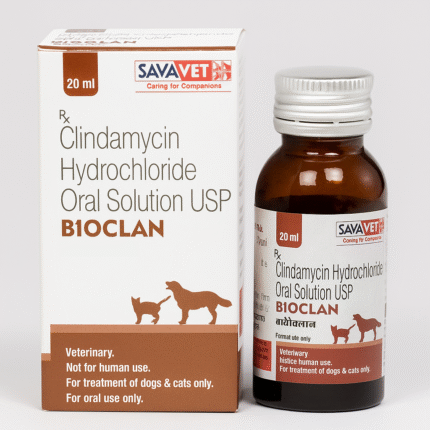
Clindamycin Oral Solution 20 mL for Cat
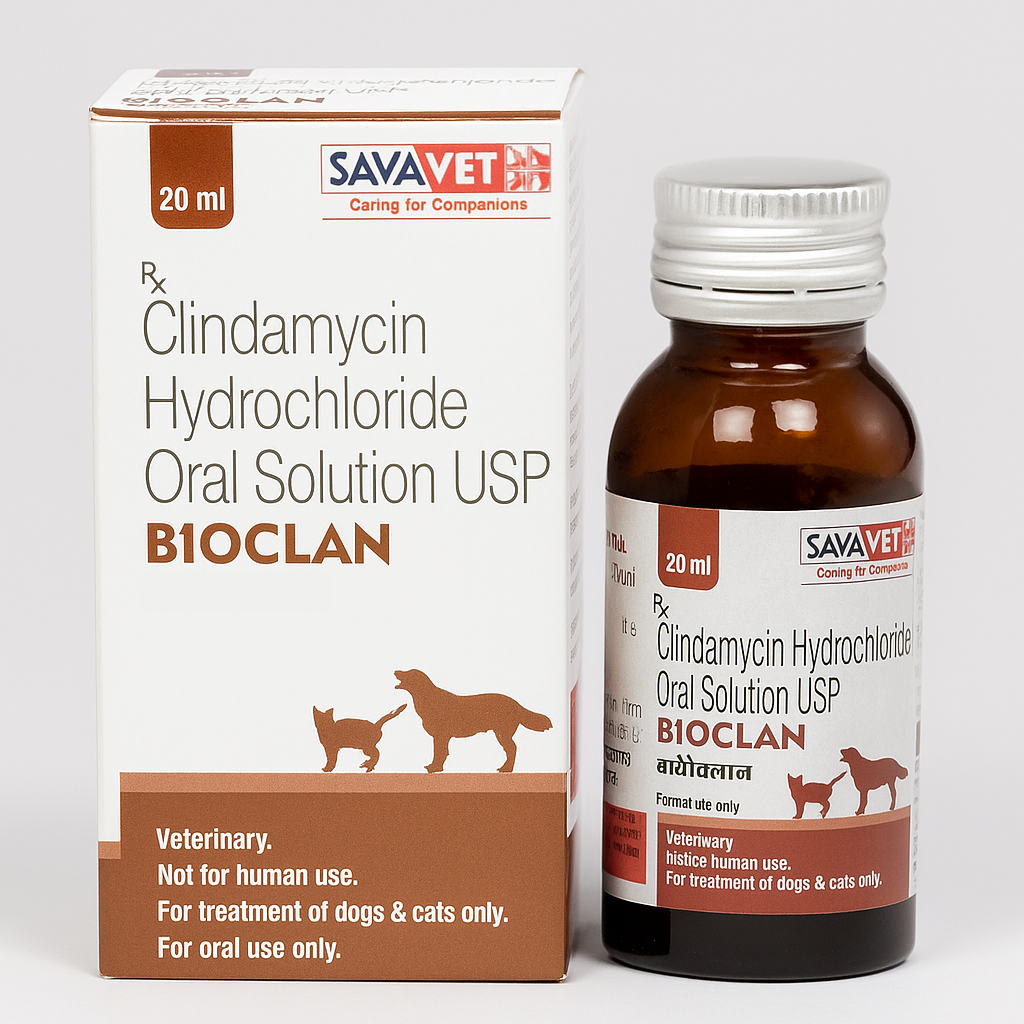
Clindamycin Oral Solution 20 mL is a liquid lincosamide antibiotic formulated specifically for cats. It is commonly prescribed to treat infections caused by anaerobic bacteria and certain Gram-positive organisms, particularly in the mouth, skin, and bone. The liquid format makes dosing more accurate and easier, especially for cats that resist tablets.
How Clindamycin Works
Clindamycin inhibits bacterial protein synthesis by binding to the 50S ribosomal subunit. Without essential proteins, bacteria cannot grow or multiply, allowing the immune system to eliminate the infection.
It has excellent penetration into:
- Bone tissue
- Dental and gingival tissue
- Abscess cavities
- Soft tissue infections
Common Indications in Cats
Dental & Oral Infections
- Periodontal disease
- Gingivitis
- Tooth root abscesses
- Post-dental procedure infections
Skin & Soft Tissue Infections
- Bite wound abscesses
- Cellulitis
- Pyoderma
- Surgical wound infections
Bone Infections (Osteomyelitis)
Clindamycin is often selected due to strong bone penetration.
Toxoplasmosis (Off-Label Use)
Used under veterinary supervision to manage Toxoplasma gondii infections.
Dosage & Administration
⚠ Always follow your veterinarian’s prescription.
Typical Dose Range:
5.5–15 mg/kg once daily OR divided every 12 hours depending on infection severity.
Example Dosing Guide (Based on 10 mg/kg and 25 mg/mL concentration)
| Cat Weight | Dose (mg) | Approximate Volume | Frequency |
| 2 kg | 20 mg | 0.8 mL | Once or twice daily |
| 3 kg | 30 mg | 1.2 mL | Once or twice daily |
| 4 kg | 40 mg | 1.6 mL | Once or twice daily |
| 5 kg | 50 mg | 2.0 mL | Once or twice daily |
| 6 kg | 60 mg | 2.4 mL | Once or twice daily |
Duration of Treatment
- Typical infections: 7–10 days
- Dental infections: 7–14 days
- Osteomyelitis: Up to 28 days
- Toxoplasmosis: 2–4 weeks
How to Administer
- Shake bottle well before use
- Use a calibrated syringe for accurate measurement
- Administer gently into the side of the mouth
- May be given with or without food
- If stomach upset occurs, give after a small meal
Ensure the cat swallows properly to prevent esophageal irritation.
Benefits of Clindamycin Oral Solution
✔ Easier to administer than tablets
✔ Accurate dosing for small cats
✔ Rapid absorption
✔ Excellent bone and dental tissue penetration
✔ Effective against anaerobic bacteria
✔ Suitable for deep abscess infections
Safety & Precautions
Use With Caution In:
- Cats with liver disease
- Cats with kidney impairment
- Pregnant or nursing cats (vet supervision required)
Avoid Concurrent Use With:
- Chloramphenicol
- Erythromycin
- Certain neuromuscular blocking agents
Possible Side Effects
Common (Usually Mild)
- Vomiting
- Diarrhea
- Drooling
- Reduced appetite
Rare but Serious
- Bloody diarrhea
- Severe lethargy
- Jaundice
- Allergic swelling or breathing difficulty
Discontinue and contact your veterinarian if severe symptoms occur.
Important Usage Guidelines
- Do not stop early even if symptoms improve
- Complete full course to prevent relapse
- Monitor hydration and appetite
- For long-term therapy, bloodwork may be recommended
Improper use may contribute to antibiotic resistance.
When to Revisit the Veterinarian
- No improvement after several days
- Severe GI upset
- Signs of allergic reaction
- Persistent infection symptoms
Follow-up exams may be required for bone infections or toxoplasmosis cases.
Storage Instructions
- Store at room temperature unless otherwise directed
- Keep tightly capped
- Keep out of reach of children and pets

Jack Thompson –
The Clindamycin Oral Solution 20 ML for Cat page was easy to navigate and the information felt organized. A good experience for pet product shopping online.
Thomas Evans –
A clean and useful listing for Clindamycin Oral Solution 20 ML for Cat. I appreciated the clear product name, size details, and simple buying process on the website.
Amanda Lewis –
I liked how clearly Clindamycin Oral Solution 20 ML for Cat was listed. The page made it easier to check the item details and complete the order without confusion.
Amanda Lewis –
The product information for Clindamycin Oral Solution 20 ML was presented neatly. It helped me review the basics before buying, and the checkout experience was smooth.
Oscar Hughes –
I found the Clindamycin Oral Solution 20 ML page helpful while comparing options for my pet. The ordering process was straightforward and the details were easy to follow.
Jessica Miller –
The product information for Clindamycin Oral Solution 20 ML was presented neatly. It helped me review the basics before buying, and the checkout experience was smooth.