






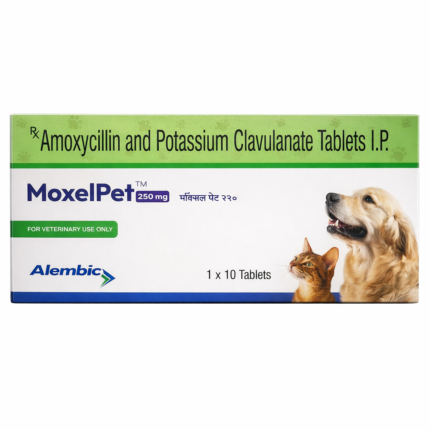
Amoxycillin & Potassium Clavulanate 500 mg Tablet for Cat
High-Strength Broad-Spectrum Antibiotic for Serious Feline Infections
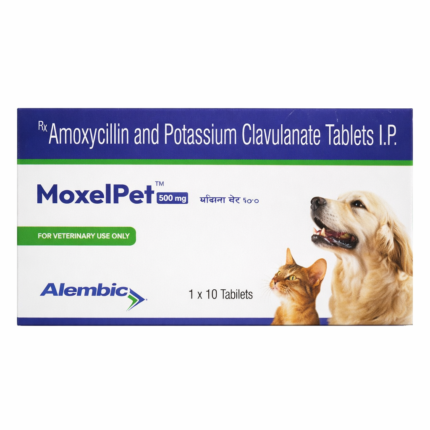
Amoxycillin & Potassium Clavulanate 500 mg Tablet for Cat is a veterinary-prescribed broad-spectrum antibiotic used for treating moderate to severe bacterial infections in cats. It combines amoxicillin, a penicillin-class antibiotic, with clavulanate potassium, which protects the antibiotic from bacterial resistance mechanisms. This combination increases treatment effectiveness in resistant or stubborn infections.
Prescription use only. Veterinary supervision required.
When Is Amoxycillin & Potassium Clavulanate 500 mg Used in Cats?
Veterinarians prescribe this high-strength formulation for:
- Deep skin and soft tissue infections
- Abscesses and infected wounds
- Respiratory infections (bronchitis, pneumonia, sinusitis)
- Urinary tract infections (UTIs)
- Dental abscesses and periodontal infections
- Gastrointestinal bacterial infections
- Post-surgical infection prevention
This strength is typically reserved for larger cats or specific clinical cases where higher dosing precision is managed by a veterinarian.
How It Works
- Amoxicillin disrupts bacterial cell wall synthesis, leading to bacterial death.
- Clavulanate potassium inhibits beta-lactamase enzymes produced by resistant bacteria.
This dual mechanism broadens antibacterial coverage and improves clinical success.
Important Dosing Information
Standard veterinary dosage range:
5–10 mg per kg body weight
Every 12 hours (twice daily)
Critical Dosing Note
A 500 mg tablet is often too strong for most cats unless precisely compounded or divided under veterinary guidance.
Accurate splitting into very small fractions is difficult and may lead to dosing errors.
For most feline patients, lower-strength tablets or liquid suspensions are preferred for safety and accuracy.
Approximate Weight Reference (For Veterinary Use Only)
| Cat Weight | Approximate Required Dose | Tablet Portion (500 mg) |
| 2 kg | 10–20 mg | Extremely small fraction |
| 4 kg | 20–40 mg | Very small fraction |
| 6 kg | 30–60 mg | Small fraction |
| 8 kg | 40–80 mg | Small fraction |
Because of splitting limitations, always consult your veterinarian before using this strength.
Administration Guidelines
- Administer every 12 hours
- May be given with food to reduce stomach upset
- Ensure the full dose is swallowed
- Do not double dose if one is missed
If accurate dosing is difficult, request a compounded liquid formulation.
Safety Information
Use only if prescribed by a licensed veterinarian.
Do NOT use if your cat:
- Has known allergy to penicillin or beta-lactam antibiotics
- Has had previous severe antibiotic reactions
Use with caution in:
- Cats with kidney disease
- Cats with liver dysfunction
- Senior cats
- Pregnant or lactating cats
Possible Side Effects
Most cats tolerate treatment well.
Common mild effects:
- Vomiting
- Diarrhea
- Reduced appetite
Serious reactions (rare):
- Facial swelling
- Difficulty breathing
- Severe lethargy
- Seizures
- Jaundice
Seek immediate veterinary care if severe reactions occur.
Antibiotic Resistance Warning
Incomplete treatment may contribute to bacterial resistance.
Always:
- Complete the full prescribed course
- Follow exact dosing schedule
- Avoid self-adjusting dosage
Product Specifications
| Attribute | Details |
| Product Name | Amoxycillin & Potassium Clavulanate 500 mg Tablet for Cat |
| Strength | 500 mg |
| Form | Oral Tablet |
| Pack Size | 10 Tablets |
| Category | Antibiotic |
| Species | Cat |
| Prescription Required | Yes |
Frequently Asked Questions
Is 500 mg safe for cats?
Only when properly dosed by a veterinarian. The tablet is high strength and usually requires careful portioning or compounding.
What infections does it treat?
Skin, respiratory, urinary, dental, and gastrointestinal bacterial infections.
How often should it be given?
Typically every 12 hours as prescribed.
Can it treat viral infections?
No. It is effective only against bacterial infections.
What happens if I miss a dose?
Give it as soon as remembered unless close to the next scheduled dose. Do not double dose.
Archie Wood –
The Amoxycillin Potassium Clavulanate 500 MG Tablet for Cat page was easy to navigate and the information felt organized. A good experience for pet product shopping online.
Chloe Henderson –
I liked how clearly Amoxycillin Potassium Clavulanate 500 MG Tablet for Cat was listed. The page made it easier to check the item details and complete the order without confusion.
Laura Bennett –
I liked how clearly Amoxycillin Potassium Clavulanate 500 MG Tablet for Cat was listed. The page made it easier to check the item details and complete the order without confusion.
Arthur Scott –
A clean and useful listing for Amoxycillin Potassium Clavulanate 500 MG Tablet. I appreciated the clear product name, size details, and simple buying process on the website.