





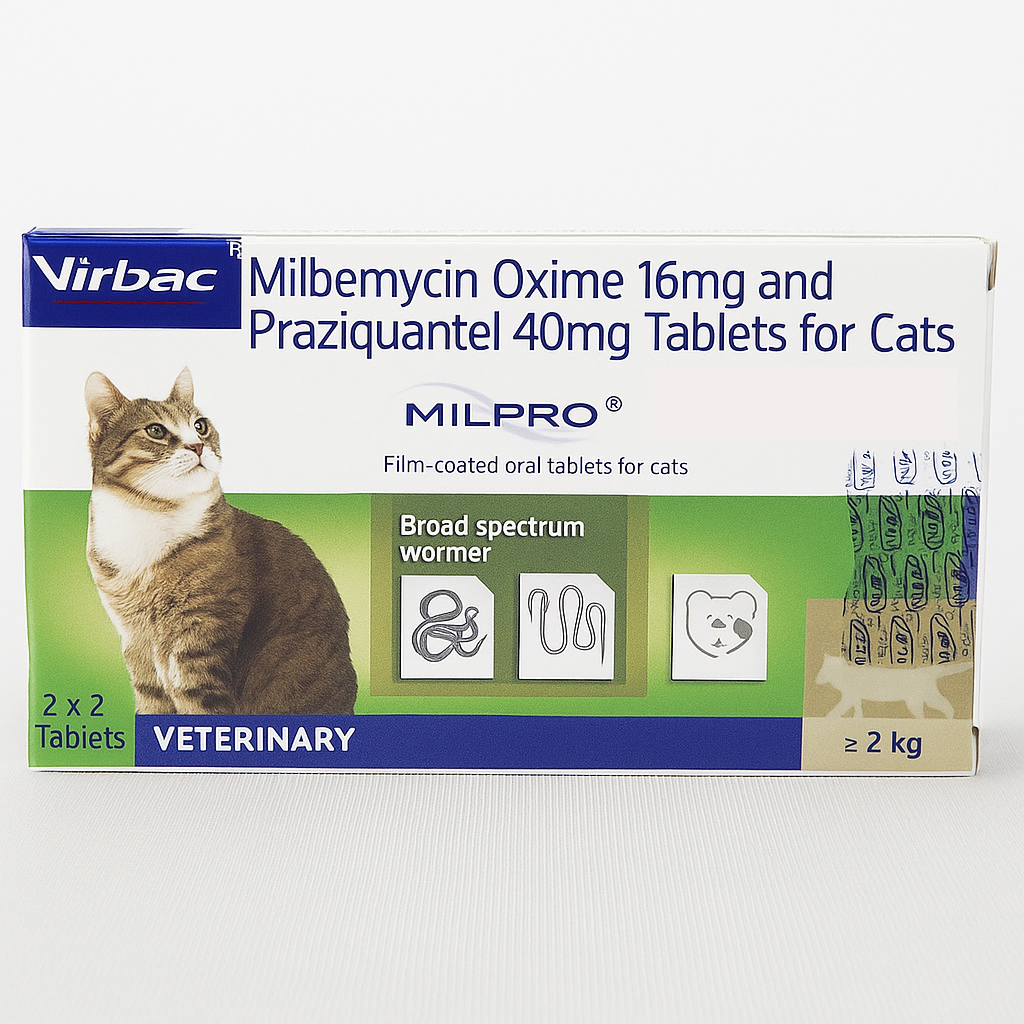
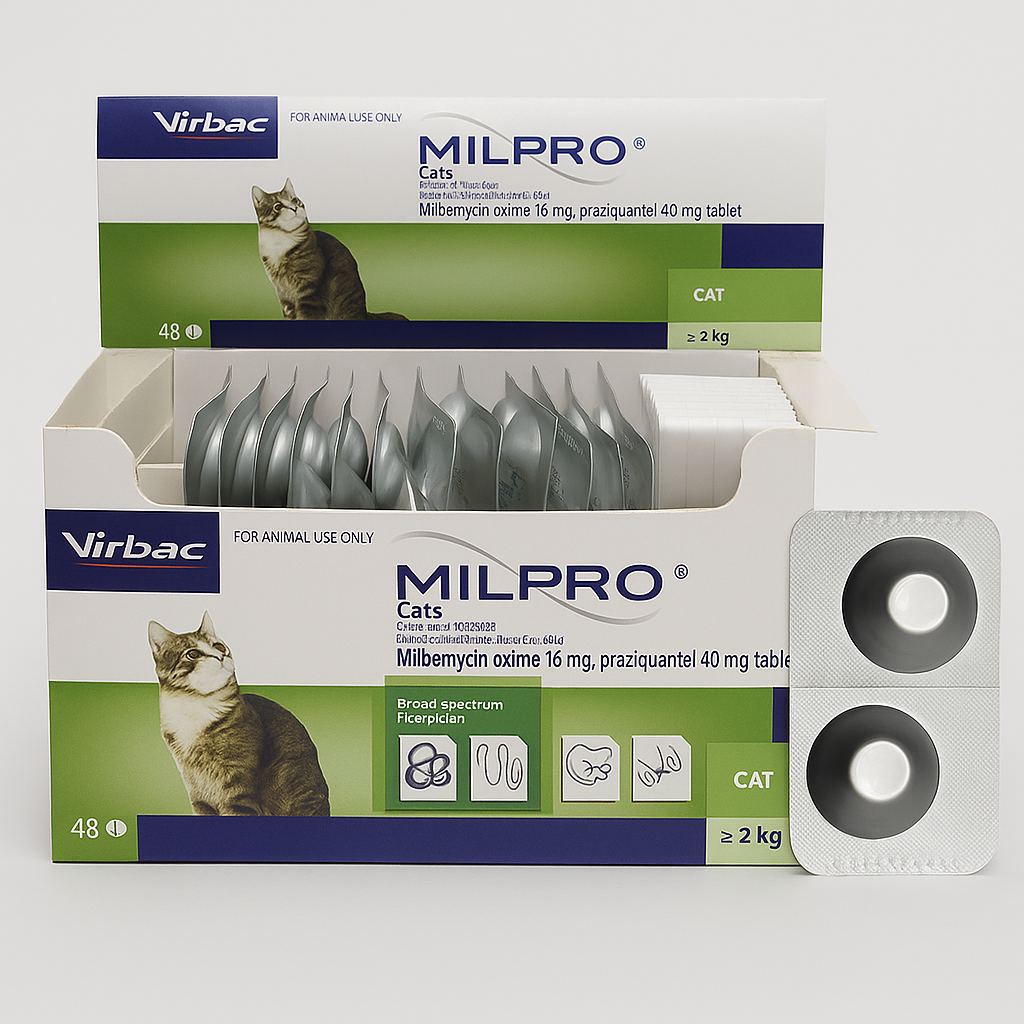
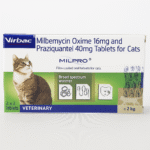
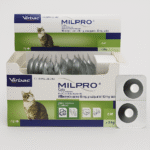

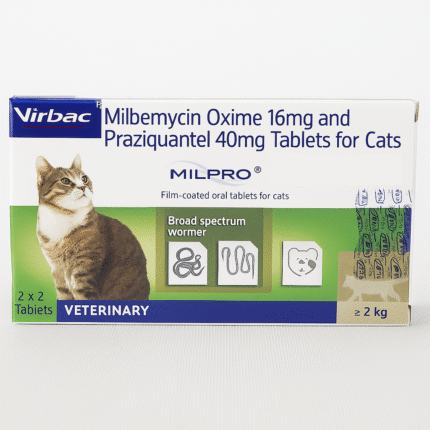
Milbemycin Oxime 16 mg for Cat
Parasites pose serious health risks to cats, especially in warm climates or outdoor environments. Mosquitoes transmit heartworm disease, while intestinal worms are commonly acquired through contaminated soil, prey, or fleas.
Milbemycin Oxime 16 mg provides:
- Monthly heartworm prevention
- Treatment of common intestinal worms
- Broad-spectrum parasite control
- Convenient oral administration
What It Treats & Prevents
Milbemycin Oxime is commonly indicated for:
1. Heartworm Prevention
Prevents development of Dirofilaria immitis (heartworm larvae transmitted by mosquitoes).
2. Roundworms
- Toxocara cati
3. Hookworms
- Ancylostoma tubaeforme
Note: Tapeworm treatment may require combination therapy depending on formulation.
How Milbemycin Oxime Works
Milbemycin Oxime belongs to the macrocyclic lactone class of antiparasitics. It works by interfering with the parasite’s nervous system, causing paralysis and death. It targets glutamate-gated chloride channels in parasites, which are essential for nerve and muscle function. This mechanism eliminates larvae before they mature and clears intestinal worms from the digestive tract.
Key Benefits
- Prevents heartworm disease
- Treats intestinal roundworms and hookworms
- Monthly dosing for convenience
- Suitable for kittens (as directed by vet)
- Generally well tolerated
- Helps reduce long-term organ damage risk
Dosage & Administration
Dosage depends on your cat’s weight. Always confirm with your veterinarian.
Typical Monthly Dosing Guide
| Cat Weight | Recommended Dose | Frequency |
| Up to 2.5 kg | 1 tablet (16 mg) | Once monthly |
| 2.5 – 5 kg | 1 tablet (16 mg) | Once monthly |
| 5 – 10 kg | 2 tablets (16 mg) | Once monthly |
Monthly administration is essential for continuous heartworm protection.
How to Give the Tablet
- Administer directly by mouth
- Hide in a small amount of food
- Use a pill dispenser if needed
Ensure the full dose is consumed.
Safety & Side Effects
Milbemycin Oxime is generally well tolerated, but possible mild reactions include:
Common (Mild)
- Vomiting
- Diarrhea
- Temporary lethargy
- Reduced appetite
Rare but Serious
- Facial swelling
- Tremors
- Difficulty breathing
- Persistent neurological symptoms
Seek veterinary care if severe reactions occur.
Precautions
- Not recommended for pregnant or lactating cats unless prescribed
- Use caution in cats with liver or kidney disease
- Avoid combining with ivermectin unless directed
- Use carefully in cats with seizure history
Effective Parasite Control Plan
For best results:
- Give medication every month, year-round
- Maintain flea prevention (tapeworm risk)
- Reduce mosquito exposure
- Schedule regular veterinary checkups
Comparison: Milbemycin vs Standard Dewormers
| Feature | Milbemycin Oxime | Standard Dewormer |
| Heartworm Prevention | Yes | No |
| Intestinal Worm Treatment | Yes | Yes |
| Monthly Schedule | Yes | Usually single-dose |
| Preventive Use | Yes | Limited |
Frequently Asked Questions
Is Milbemycin Oxime prescription-only?
Yes, heartworm preventatives typically require veterinary consultation.
Can it replace regular deworming tablets?
It covers roundworms and hookworms. Tapeworms may require additional treatment.
When should kittens start?
Usually from 6 weeks of age, depending on veterinary guidance.


Ashley Morgan –
Ordering Milbemycin Oxime 16 MG for Cat was simple. The page gave enough information to review the item properly before confirming the purchase.
Ashley Morgan –
The product information for Milbemycin Oxime 16 MG for Cat was presented neatly. It helped me review the basics before buying, and the checkout experience was smooth.
Olivia Walker –
The product information for Milbemycin Oxime 16 MG for Cat was presented neatly. It helped me review the basics before buying, and the checkout experience was smooth.