





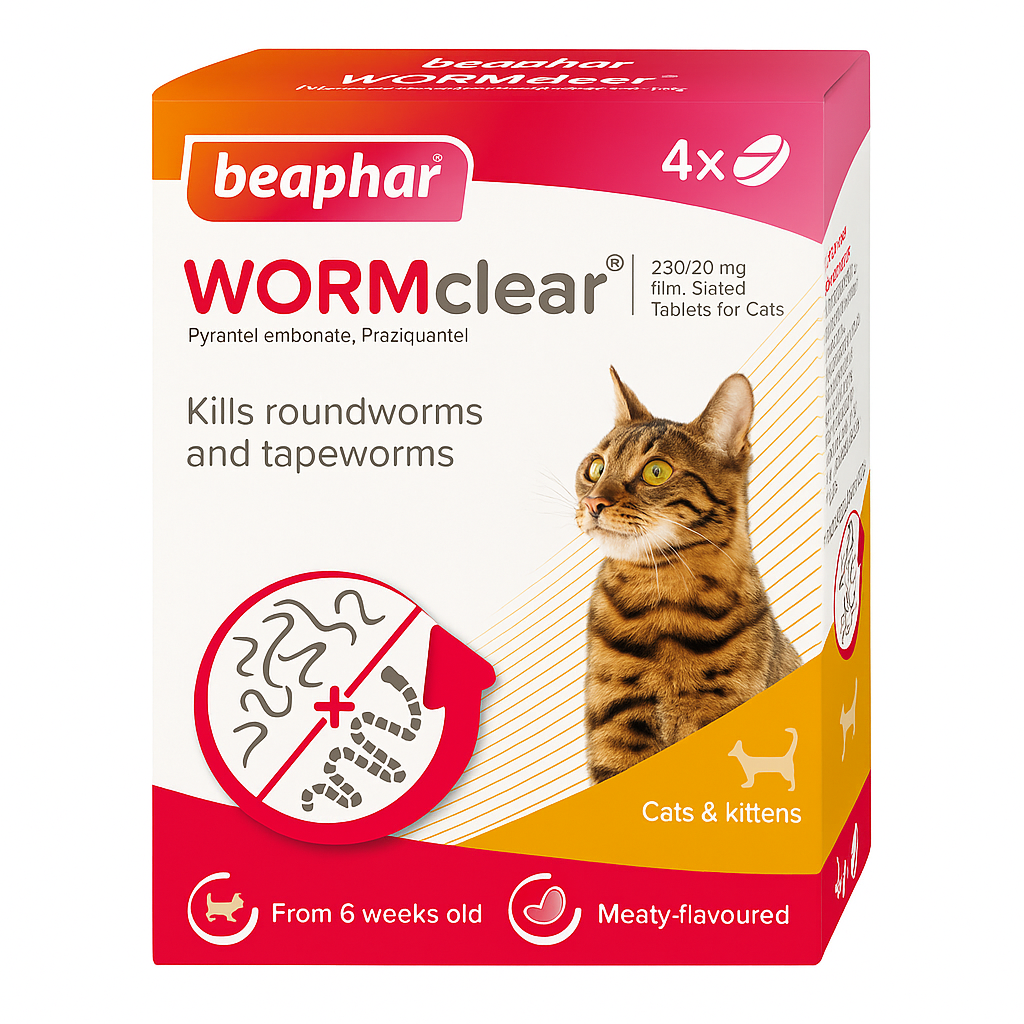
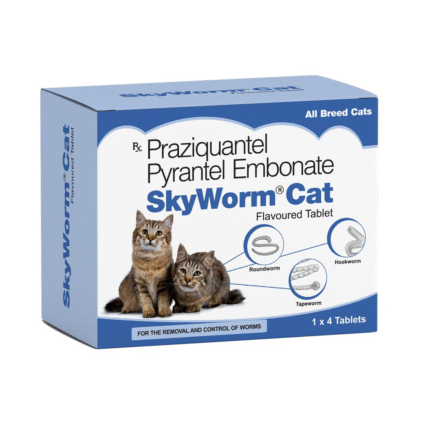

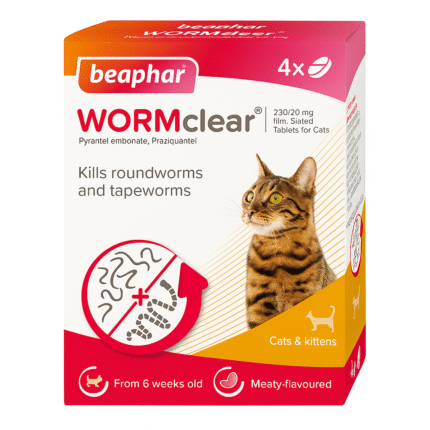
Beaphar Worm Tablet for Cat
Product Overview
Intestinal worms are common in cats—even indoor cats can become infected through fleas, contaminated surfaces, or prey. Untreated infestations may cause:
- Vomiting
- Diarrhea
- Weight loss
- Bloated abdomen
- Lethargy
- Visible worm segments
Routine deworming is an essential part of feline preventive healthcare.
Active Ingredients & How They Work
Pyrantel Embonate
- Effective against roundworms and hookworms
- Works by paralyzing worms, allowing natural expulsion
Praziquantel
- Targets tapeworms
- Disrupts parasite cell membranes, leading to death
Together, these ingredients provide broad-spectrum intestinal worm control.
Worms Treated
Beaphar Worm Tablets are effective against:
- Roundworms (Toxocara cati, Toxascaris leonina)
- Tapeworms (Dipylidium caninum, Taenia species)
- Hookworms (Ancylostoma tubaeforme)
Regular treatment helps prevent complications like anemia, malnutrition, and digestive disturbances.
When to Use
- Routine deworming every 3–6 months
- After flea infestations (tapeworm risk)
- If symptoms of worms appear
- In multi-pet households
- Outdoor or hunting cats
Always consult your veterinarian for a schedule tailored to your cat’s lifestyle.
Dosage Guidelines
Dosage is based on body weight and given as a single oral dose.
| Cat Weight | Dosage |
| Up to 1 kg | ½ tablet |
| 1–5 kg | 1 tablet |
| 5–7 kg | 1½ tablets |
| 7–10 kg | 2 tablets |
| Over 10 kg | 2 tablets + ½ tablet per additional 2.5 kg |
Important Notes
- Do not use in kittens under 6 weeks
- Avoid use in pregnant or nursing cats unless advised
- Repeat dose after 2 weeks if infestation is heavy
How to Administer
You can give Beaphar Worm Tablets by:
- Placing directly at the back of the throat
- Hiding in wet food
- Using a pill dispenser
- Crushing and mixing with food (if approved by vet)
Ensure your cat swallows the full dose.
Benefits of Beaphar Worm Tablets
- Broad-spectrum worm control
- Single-dose convenience
- Easy tablet administration
- Helps prevent secondary health issues
- Suitable for routine prevention
Possible Side Effects
Most cats tolerate treatment well. Rare mild reactions may include:
- Temporary vomiting
- Soft stool
- Mild lethargy
If symptoms persist or worsen, consult a veterinarian immediately.
Safety Precautions
- Follow weight-based dosing carefully
- Do not overdose
- Avoid combining with other dewormers unless prescribed
- Store in original packaging
Seek veterinary attention immediately if overdose is suspected.
Deworming Schedule Recommendation
- Kittens: As directed by vet
- Adult indoor cats: Every 3–6 months
- Outdoor cats: Every 3 months
- High-risk households: As advised by vet
Regular deworming reduces the risk of parasite transmission and protects household members.
Frequently Asked Questions
How often should I deworm my cat?
Typically every 3–6 months, depending on exposure risk.
Do indoor cats need deworming?
Yes. Fleas and contaminated environments can still cause infection.
Can I give this with flea treatment?
Yes, but consult your vet before combining treatments.
What if my cat vomits after dosing?
If vomiting occurs within 1 hour, contact your veterinarian.






Arthur Scott –
The Beaphar Worm Tablet for Cat page was easy to navigate and the information felt organized. A good experience for pet product shopping online.
Jessica Miller –
The product information for Beaphar Worm Tablet for Cat was presented neatly. It helped me review the basics before buying, and the checkout experience was smooth.
Jessica Miller –
The product information for Beaphar Worm Tablet for Cat was presented neatly. It helped me review the basics before buying, and the checkout experience was smooth.