





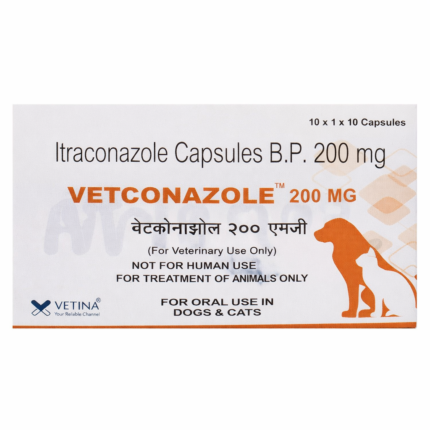
Itraconazole Capsules 200 mg for dog
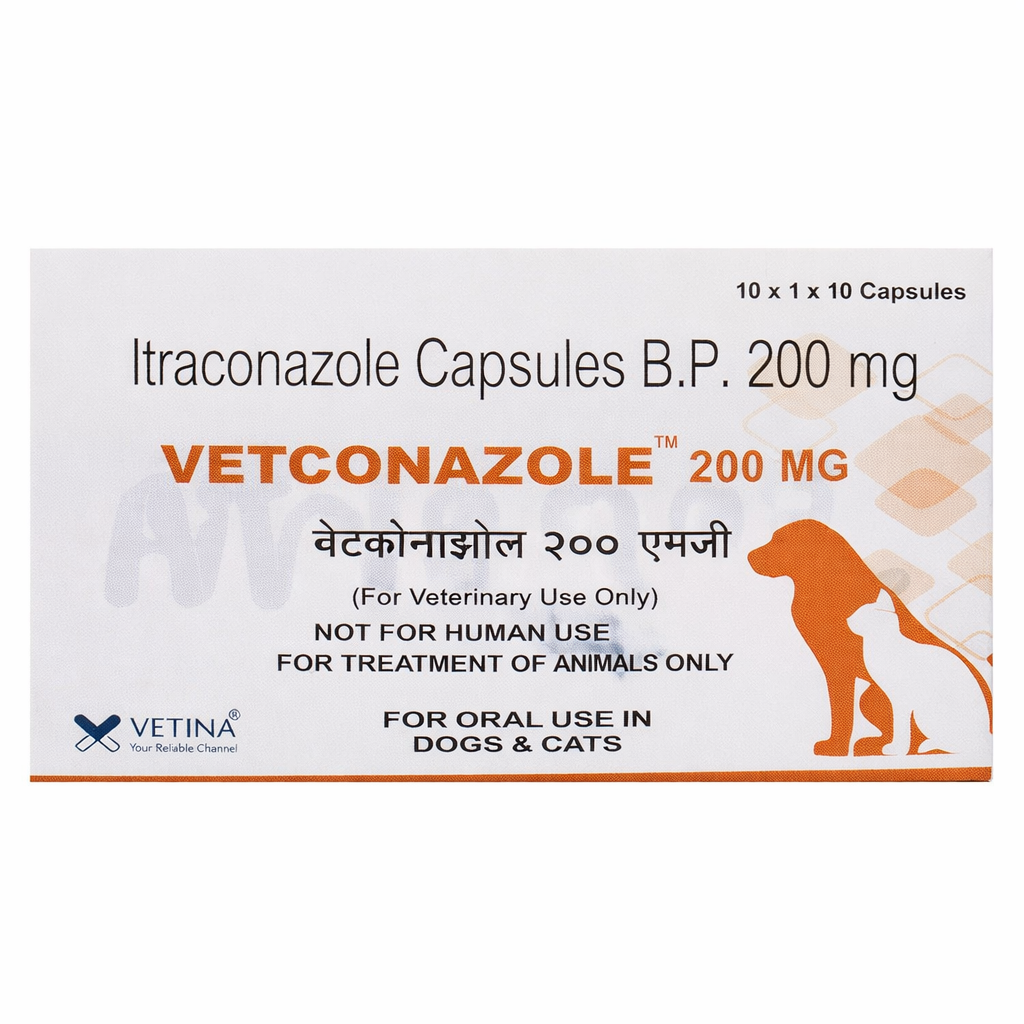
Itraconazole Capsules 200 mg is a prescription oral antifungal formulated for dogs requiring systemic treatment of moderate to severe fungal infections. It is commonly selected when topical therapy is insufficient or when infections involve internal organs, deep tissues, or widespread skin involvement.
When Veterinarians Prescribe Itraconazole
Itraconazole may be prescribed for dogs diagnosed with:
- Blastomycosis
- Histoplasmosis
- Aspergillosis (localized forms)
- Cryptococcosis (non-CNS cases)
- Severe or generalized dermatophytosis
- Systemic yeast or fungal infections
- Refractory fungal infections unresponsive to topical therapy
Diagnosis and treatment duration must be determined by a veterinarian.
How Itraconazole Works
Itraconazole inhibits ergosterol synthesis, an essential component of fungal cell membranes. Without ergosterol, fungal cells lose structural integrity and cannot survive.
Key characteristics:
- Broad antifungal spectrum
- High tissue penetration
- Long tissue retention
- Suitable for long-term therapy when monitored
Product Details
- Active Ingredient: Itraconazole
- Strength: 200 mg per capsule
- Form: Oral capsule
- Pack Size: 10 capsules
- Route: Oral use
- Species: Dogs
- Prescription Status: Veterinary prescription required
Dosage & Administration
Itraconazole dosing is weight-based and adjusted by the veterinarian depending on infection type and severity.
Typical Reference Dosing
- Approximate dose: 5 mg/kg once daily
- Frequency: Once daily
- Duration: Several weeks to several months
Do not alter dose, split capsules, or discontinue early without veterinary instruction.
Administration Guidelines
- Administer at the same time each day
- Best given with food to enhance absorption
- Avoid concurrent use with antacids unless approved
- Do not crush or open capsules unless specifically directed
Treatment Duration
| Condition | Duration |
| Systemic fungal infections | 2–6 months |
| Severe dermatophytosis | 4–8 weeks |
| Chronic infections | As directed by veterinarian |
Treatment usually continues beyond clinical improvement to prevent relapse.
Safety & Monitoring
Itraconazole is effective but requires monitoring during prolonged therapy.
Commonly Observed Effects
- Reduced appetite
- Mild gastrointestinal upset
- Lethargy
Less Common but Serious
- Elevated liver enzymes
- Jaundice
- Persistent vomiting
Veterinarians may recommend periodic liver function tests during extended treatment.
Precautions & Contraindications
- Not recommended in pregnant or lactating dogs
- Use cautiously in dogs with liver disease
- Inform your veterinarian about all medications being used
- Do not combine with antacids, certain antibiotics, or steroids without guidance
Drug Interactions
Itraconazole can interact with:
- Corticosteroids
- Cyclosporine
- Certain antibiotics
- Anticoagulants
Always disclose full medication history before starting therapy.
FAQ
Is itraconazole safe for dogs?
Yes, when prescribed and monitored by a veterinarian.
Can itraconazole treat ringworm in dogs?
It may be used for severe or generalized cases when topical treatment is insufficient.
How long does itraconazole take to work?
Clinical improvement may be seen in 2–4 weeks, but treatment usually continues longer.

Reviews
There are no reviews yet.