





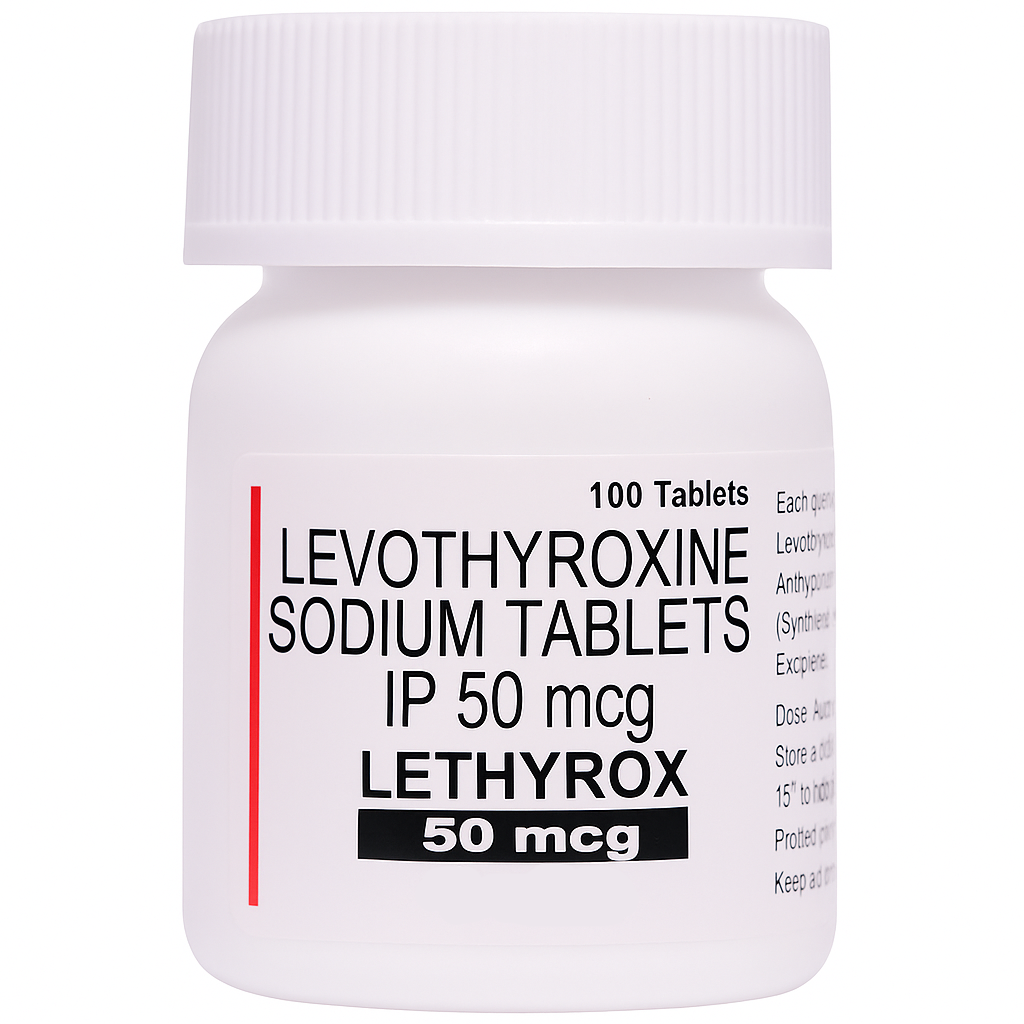
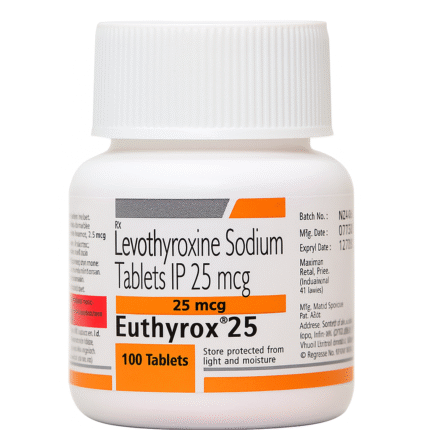
Levothyroxine Sodium Tablets 50 mcg for Dog
Levothyroxine Sodium Tablets 50 mg are a veterinary thyroid hormone replacement therapy used to manage canine hypothyroidism. This strength is commonly prescribed for medium to large dogs requiring higher thyroid hormone supplementation to restore normal metabolism, energy levels, and skin health.
What Levothyroxine Is Used For in Dogs
Levothyroxine is prescribed when a dog’s thyroid gland does not produce sufficient thyroxine (T4).
Primary indication
- Hypothyroidism in dogs
Common symptoms it helps manage
- Low energy, lethargy
- Unexplained weight gain
- Hair loss or thinning coat
- Dry, flaky skin
- Cold intolerance
- Recurrent skin or ear infections
- Mental dullness or behavioral changes
How Levothyroxine Works
Levothyroxine Sodium is a synthetic form of thyroxine (T4).
Physiological action
- Replaces deficient thyroid hormone
- Normalizes metabolic rate
- Supports energy production
- Improves skin and coat quality
- Helps regulate heart rate and body temperature
T4 is converted into active T3 in body tissues after absorption.
Key Benefits
- Restores normal thyroid hormone levels
- Improves energy and activity
- Supports healthy skin and coat regrowth
- Helps manage weight
- Reduces recurrent infections linked to hypothyroidism
- Enables long-term control of thyroid imbalance
Dosage & Administration
Form: Oral tablet
Strength: 50 mg
Route: Oral
Frequency: Usually twice daily
General veterinary dosing
- 0.02–0.05 mg per kg body weight per day
- Divided into two equal doses
Administration guidelines
- Give on an empty stomach (30 minutes before food)
- Administer at the same times each day
- Tablets should be swallowed whole
Dose adjustments are based on blood thyroid levels.
Monitoring & Long-Term Use
Hypothyroidism treatment is typically lifelong.
Veterinary monitoring includes:
- Serum T4 testing (4–8 weeks after starting or dose change)
- Periodic rechecks once stabilized
Dose changes are common and expected.
Safety & Side Effects
Levothyroxine is generally well tolerated when dosed correctly.
Possible side effects (usually from excess dosing)
- Increased thirst or urination
- Increased appetite
- Weight loss
- Restlessness or hyperactivity
- Rapid heart rate
Serious signs (seek veterinary care)
- Tremors or seizures
- Persistent panting
- Cardiac irregularities
Important Precautions
- Use with caution in dogs with heart disease
- Do not adjust dose without veterinary advice
- Overdosing may cause hyperthyroidism
- Not interchangeable with human thyroid dosing
Drug Interactions
Inform your veterinarian if your dog is receiving:
- Antacids
- Calcium or iron supplements
- Corticosteroids
- Certain anticonvulsants
These may affect absorption or effectiveness.
Storage Instructions
Store in a cool, dry place below 25°C.
Keep tightly closed and out of reach of pets and children.
FAQ
What is levothyroxine used for in dogs?
It treats hypothyroidism by replacing deficient thyroid hormone.
Is levothyroxine a lifelong medication for dogs?
Yes. Most dogs require lifelong thyroid hormone replacement.
How long does levothyroxine take to work?
Energy improves within 1–2 weeks; skin and coat changes take longer.
Can levothyroxine be given with food?
Absorption is best on an empty stomach.
What happens if the dose is too high?
Dogs may show signs of hyperthyroidism and need dose reduction.

George Roberts –
The Levothyroxine Sodium Tablets 50 Mcg for Dog page was easy to navigate and the information felt organized. A good experience for pet product shopping online.
Harry Davies –
The website made it simple to find and order Levothyroxine Sodium Tablets 50 Mcg for Dog. The product page was clean, direct, and easy to use.