





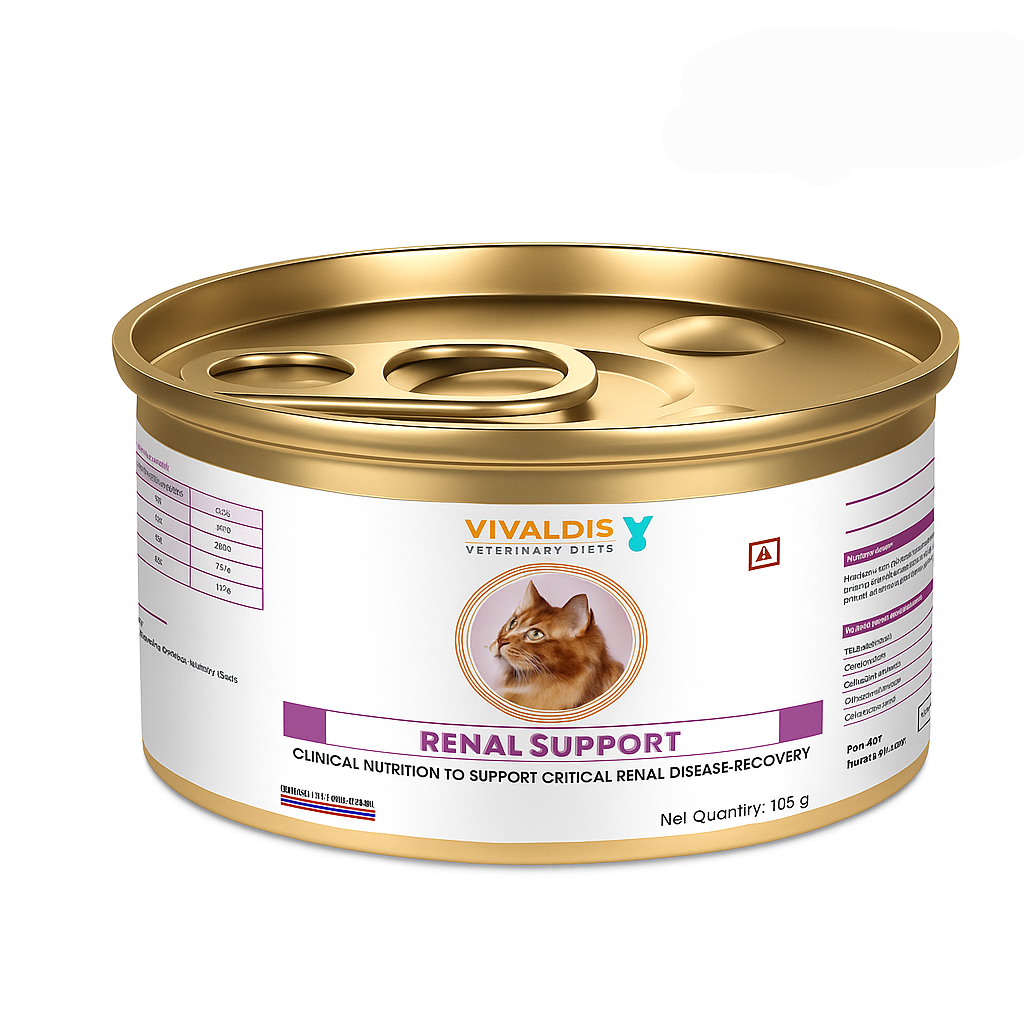

Renal Support for Cats 105g
Kidney disease is one of the most common age-related conditions in cats. Because CKD is progressive and irreversible, nutritional management is one of the most powerful tools to:
- Slow disease progression
- Reduce uremic toxin buildup
- Maintain hydration
- Support appetite
- Improve quality of life
Renal Support 105g is scientifically formulated to meet these specific needs.
Key Therapeutic Features
- Low Phosphorus – Helps slow CKD progression
- Moderate, High-Quality Protein – Maintains muscle while reducing toxin production
- Low Sodium – Supports blood pressure control
- Omega-3 Fatty Acids (EPA/DHA) – Reduce renal inflammation
- High Moisture Content (75–80%) – Supports hydration
- Enhanced Palatability – Encourages eating in cats with poor appetite
- Antioxidant Enriched – Protects kidney cells from oxidative stress
Indications for Use
Renal Support 105g may be recommended for:
1. Chronic Kidney Disease (IRIS Stages 1–4) Long-term dietary therapy to slow renal decline.
2. Azotemia / Uremia Helps reduce nitrogenous waste buildup (BUN, creatinine).
3. Proteinuria Controlled protein reduces kidney filtration stress.
4. Hypertension Secondary to CKD Low sodium supports cardiovascular health.
5. Post-Renal Surgery Recovery Supports nutritional stabilization after kidney procedures.
6. Early Renal Aging May be recommended preventively in aging cats with early lab changes.
Typical Nutritional Profile (Per 100g)
| Nutrient | Approximate Content |
| Crude Protein | 6–8% |
| Crude Fat | 5–6% |
| Moisture | 75–80% |
| Phosphorus | 0.15–0.25% |
| Sodium | Restricted |
| Energy | ~90–100 kcal |
Benefits of Renal Support 105g
- Slows CKD progression
- Reduces uremic symptoms (vomiting, lethargy)
- Supports lean muscle mass
- Encourages appetite
- Improves hydration
- Supports blood pressure regulation
- Enhances overall comfort and longevity
Feeding Guidelines
Feeding amounts vary based on weight and disease stage.
| Cat Weight | Daily Amount | Approx. Cans |
| 3 – 3.5 kg | 125 – 150 g | 1.2 – 1.4 cans |
| 4 – 4.5 kg | 150 – 170 g | 1.4 – 1.6 cans |
| 5 – 5.5 kg | 185 – 210 g | 1.8 – 2 cans |
Administration Tips
- Divide into 2–3 meals daily
- Serve at room temperature
- Transition gradually over 7 days
- Provide fresh water at all times
- Refrigerate opened tins and use within 48 hours
Transition Plan
| Day | Renal Support | Previous Food |
| 1–2 | 25% | 75% |
| 3–4 | 50% | 50% |
| 5–6 | 75% | 25% |
| 7+ | 100% | 0% |
Safety & Precautions
Do Not Use In:
- Healthy adult cats without renal diagnosis
- Kittens
- Pregnant or nursing cats
- Cats requiring high-protein recovery diets
Possible Mild Effects:
- Temporary soft stool during transition
- Initial food refusal (improves once accustomed)
- Rare allergic reaction
Seek Veterinary Attention If:
- Persistent vomiting
- Refusal to eat for 24–48 hours
- Extreme lethargy
- Sudden worsening symptoms
Renal diets must always be used under veterinary supervision with regular bloodwork monitoring.
FAQ
Can this cure kidney disease?
No. It helps manage and slow progression, not cure CKD.
How long should my cat stay on this diet?
Most CKD cats require lifelong feeding.
Can it be mixed with regular food?
Only if approved by your veterinarian.
How soon will improvement be visible?
Appetite and energy often improve within 1–2 weeks.



Reviews
There are no reviews yet.