





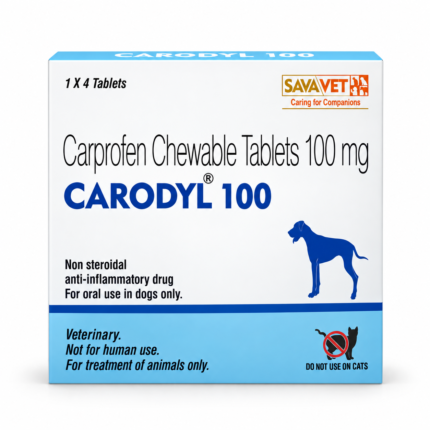
What Carprofen Is Used For
Carprofen is one of the most widely used anti-inflammatory medicines in canine practice. It is prescribed for two main situations: the ongoing joint pain and stiffness of osteoarthritis, and the short-term pain and swelling that follow soft tissue or orthopaedic surgery.
It works by reducing the production of the inflammatory compounds that drive pain and swelling. Dogs on it often become noticeably more willing to move, climb stairs and get up after resting.
Why the Chewable Form Helps
Dogs on long-term arthritis treatment take medication every day, sometimes for years. A chewable tablet that the dog accepts voluntarily makes that far easier to sustain than a tablet that has to be hidden in food or pushed down the throat. Consistency in dosing is what keeps arthritic dogs comfortable.
The Four-Tablet Pack
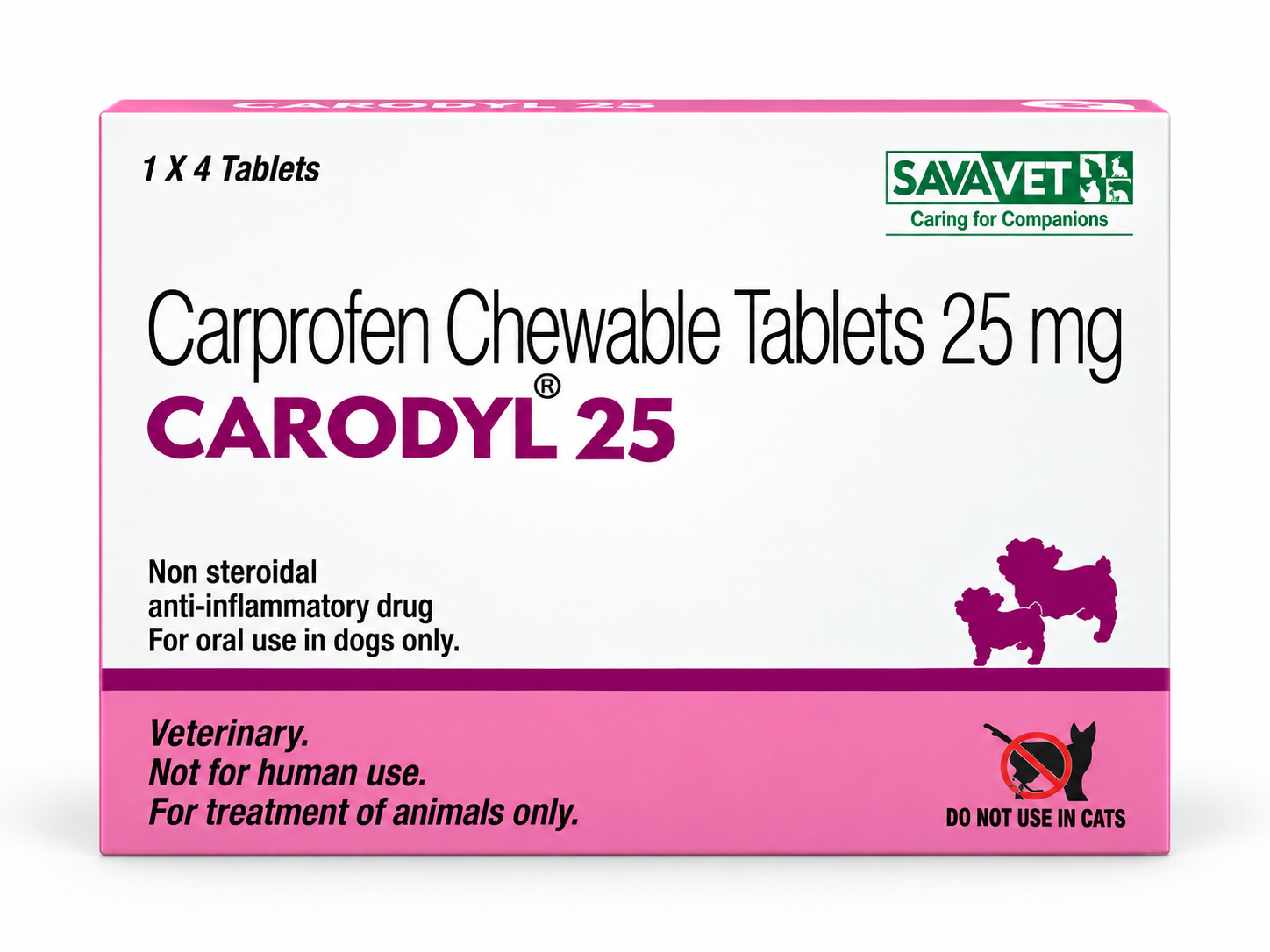
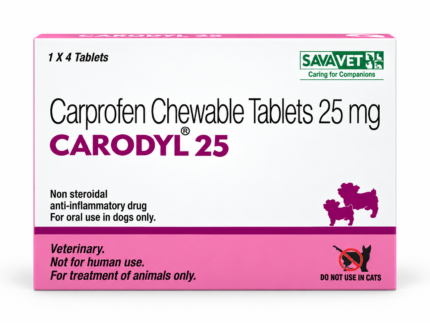
This smaller pack suits short courses — a few days of post-operative pain relief, or an initial trial before committing to a longer supply. For ongoing arthritis management, the larger Carodyl packs are more economical.
Specifications
| Specification | Detail |
|---|---|
| Active ingredient | Carprofen 25 mg |
| Drug class | Non-steroidal anti-inflammatory (NSAID) |
| Pack size | 1 × 4 tablets |
| Form | Chewable tablet |
| Species | Dogs only — not for cats |
| Manufacturer | Savavet (Sava Healthcare) |
| Prescription | Veterinary prescription required |
Dosage & Administration
The usual canine dose is 4.4 mg per kg body weight once daily, or 2.2 mg per kg twice daily, given by mouth. Your veterinarian will set the exact dose and course length for your dog. Give with or after food to reduce the chance of stomach upset. Do not exceed the prescribed dose or combine with any other NSAID or corticosteroid.
Dr. Moliya (DVM) to verify against the current pack insert before publication.
Safety Information & Warnings
- FOR DOGS ONLY. DO NOT GIVE TO CATS. Cats lack the liver enzyme needed to clear carprofen safely and can be seriously harmed by it.
- Do not give alongside any other NSAID (including aspirin or meloxicam) or any corticosteroid.
- Not for dogs with existing kidney disease, liver disease, gastrointestinal ulceration or bleeding disorders unless a veterinarian has specifically approved it.
- Stop the medication and contact your veterinarian if you see vomiting, diarrhoea, black or tarry stools, loss of appetite, lethargy, yellowing of the eyes or gums, or increased thirst and urination.
- Dogs on long-term treatment should have periodic blood tests to monitor liver and kidney function.
- Keep out of reach of children. Not for human use.
Frequently Asked Questions
Can I give Carodyl to my cat?
No. Carprofen must never be given to cats. Cats cannot metabolise it the way dogs do, and even a single dog-sized dose can cause serious harm. If your cat needs pain relief, your veterinarian will prescribe something formulated for cats.
How long before my dog feels better?
Many owners notice improved movement within a day or two. For osteoarthritis, the fuller benefit usually shows over the first one to two weeks of consistent dosing.
Can I give it on an empty stomach?
It is better given with or after food. Food reduces the chance of stomach irritation, which is the most common side effect of any NSAID.
What should I watch for?
Appetite, stool and energy levels. Vomiting, diarrhoea, black stools, unusual tiredness or yellowing of the eyes and gums all mean stop the medicine and call your veterinarian.
Does my dog need blood tests?
For short courses, usually not. For long-term arthritis treatment, yes — periodic liver and kidney monitoring is standard practice and your veterinarian will advise on frequency.

Reviews
There are no reviews yet.