





What Carprofen Is Used For
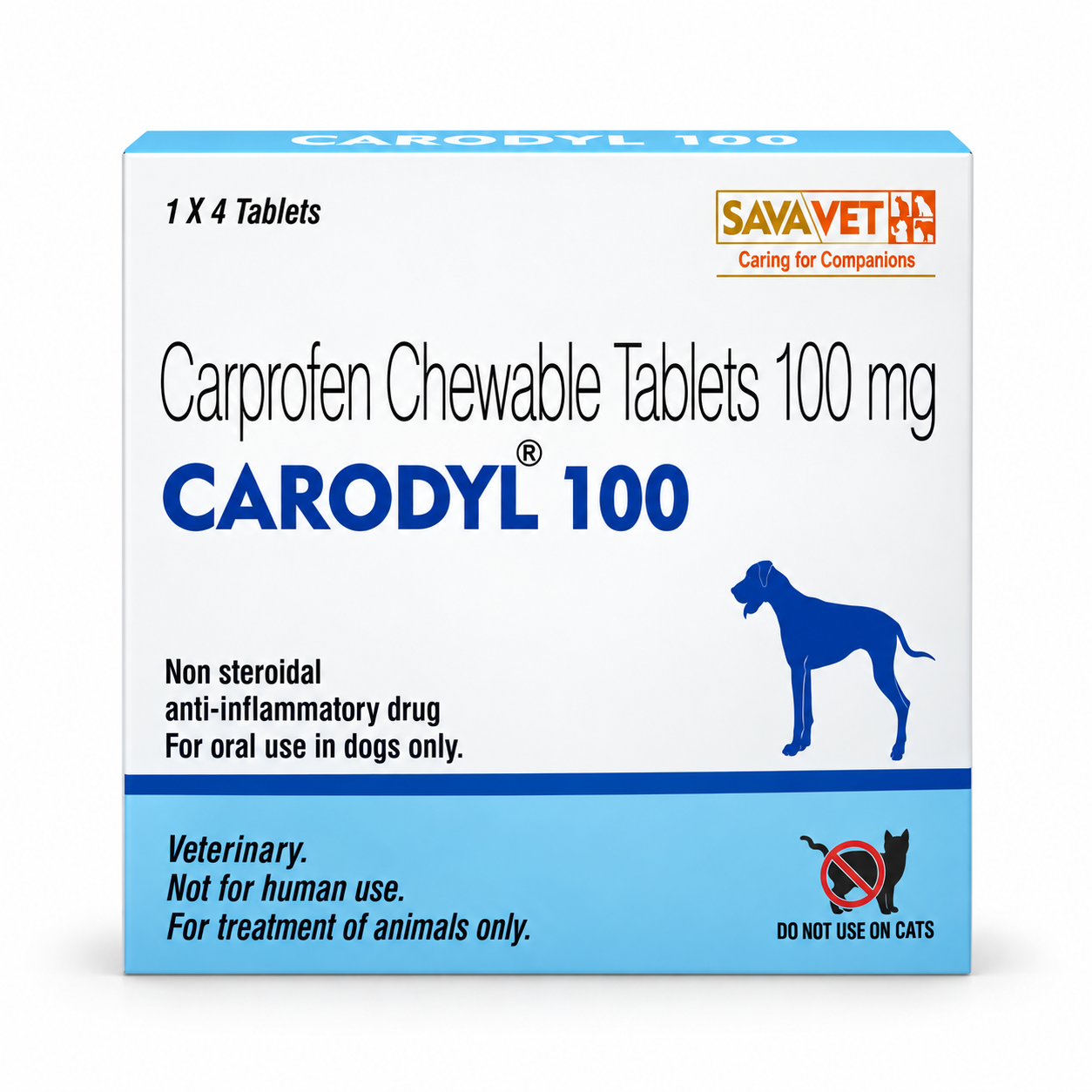
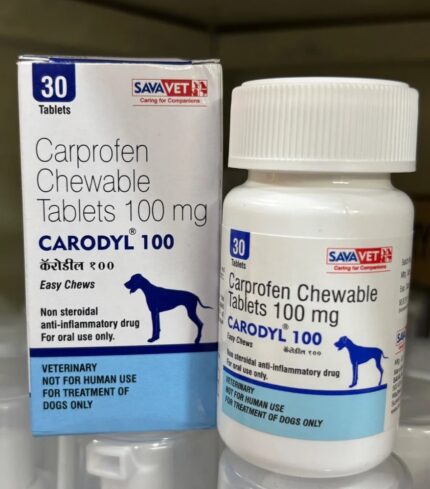
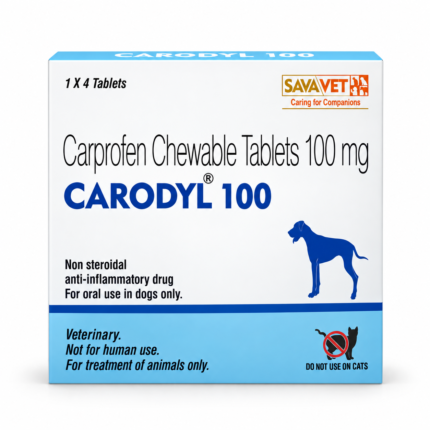
Carprofen is a veterinary NSAID prescribed for the joint pain and stiffness of canine osteoarthritis, and for controlling pain and swelling after surgery. The 100 mg strength is intended for larger dogs, where the 25 mg tablet would require an impractical number of tablets per dose.
Owners typically report that dogs become more willing to move, rise more easily after rest and show renewed interest in walks.
Choosing the Right Strength
Carprofen is dosed by body weight, so the tablet strength that suits your dog depends entirely on what it weighs. Your veterinarian will specify both the strength and the number of tablets. Never substitute strengths or estimate — an NSAID overdose damages the kidneys and gut.
The Six-Tablet Pack
This pack suits a short post-operative course or the first few days of a new prescription. For ongoing arthritis management, the 30-tablet pack is the more practical choice.
Specifications
| Specification | Detail |
|---|---|
| Active ingredient | Carprofen 100 mg |
| Drug class | Non-steroidal anti-inflammatory (NSAID) |
| Pack size | 1 × 6 tablets |
| Form | Chewable tablet (‘Easy Chews’) |
| Species | Dogs only — not for cats |
| Manufacturer | Savavet (Sava Healthcare) |
| Prescription | Veterinary prescription required |
Dosage & Administration
The usual canine dose is 4.4 mg per kg body weight once daily, or 2.2 mg per kg twice daily, given by mouth. Your veterinarian will set the exact dose and course length. Give with or after food. Do not exceed the prescribed dose or combine with any other NSAID or corticosteroid.
Dr. Moliya (DVM) to verify against the current pack insert before publication.
Safety Information & Warnings
- FOR DOGS ONLY. DO NOT GIVE TO CATS. Carprofen is unsafe in cats at any dose intended for dogs.
- Do not give alongside any other NSAID or any corticosteroid.
- Not suitable for dogs with kidney disease, liver disease, gastrointestinal ulceration or bleeding disorders without specific veterinary approval.
- Stop and contact your veterinarian if you see vomiting, diarrhoea, black or tarry stools, appetite loss, lethargy, yellowing of the eyes or gums, or increased thirst.
- Periodic blood testing is recommended for dogs on long-term treatment.
- Keep out of reach of children. Not for human use.
Frequently Asked Questions
What is the difference between Carodyl 25 and Carodyl 100?
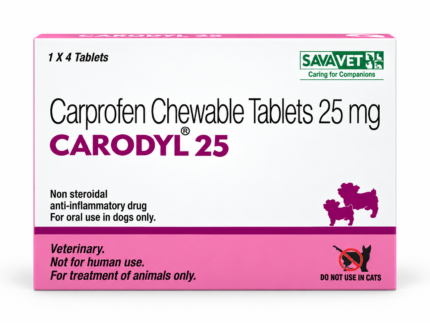
Only the strength. Carodyl 25 contains 25 mg of carprofen per tablet and Carodyl 100 contains 100 mg. Which one your dog needs depends on its weight, and your veterinarian will specify.
Can I break a 100 mg tablet in half for a smaller dog?
Only if your veterinarian has told you to. Chewable tablets are not always scored for accurate splitting, and guessing at an NSAID dose is a genuine risk to the kidneys and gut.
Is it safe for cats?
No. Carprofen must never be given to cats under any circumstances.
How long can my dog stay on it?
Some dogs take carprofen for years under veterinary supervision with regular blood monitoring. Others need it only for a few days after surgery. Your veterinarian decides based on the condition being treated.
Can I give it with a joint supplement?
Usually yes, and many veterinarians recommend it. Glucosamine-based supplements work differently from NSAIDs and are often used alongside them. Confirm with your vet first.


Reviews
There are no reviews yet.